

⚡ Quick Answer Box
yoga increases immune system function through four measurable mechanisms: reducing cortisol (which suppresses immune activity when chronically elevated), stimulating lymphatic circulation (the immune system’s transport network), activating the parasympathetic nervous system (which restores immune cell production), and reducing systemic inflammation (the root driver of most immune dysfunction). The best yoga for immunity combines inversions, twists, chest openers, and breathwork practiced consistently 4–5 times per week. Research confirms measurable improvements in natural killer cell activity, immunoglobulin levels, and inflammatory markers within 8–12 weeks of regular practice.
You wash your hands. You take your supplements. You get enough sleep — most nights. And yet you still catch every cold that passes through your office. Your energy is low. Your recovery from illness is slow. Something in your immune system is not operating at full capacity.
Yoga to increase immune system function is one of the most evidence-supported natural interventions available — and one of the least understood. Most people associate yoga with flexibility and stress relief. What they don’t know is that yoga directly influences the biological systems that determine how effectively your body defends itself against infection, manages inflammation, and recovers from illness.
This guide covers the complete science of how yoga strengthens immunity, which specific poses deliver the greatest immunological benefit, why they work at a cellular and physiological level, and how to build them into a practical daily routine that produces measurable results.
This is not generic wellness advice. Every pose in this guide is selected for a specific, named mechanism by which it supports immune function.
The Science: How Yoga Increases Immune System Function
Understanding the mechanisms makes the practice more effective — and the commitment more sustainable. Here are the four primary pathways through which yoga increases immune system function.
Mechanism 1: Cortisol Regulation and Immune Restoration
Cortisol — the body’s primary stress hormone — is one of the most powerful suppressors of immune function available in human physiology.
When cortisol is chronically elevated (as it is in most modern adults experiencing ongoing work, relationship, financial, or health stress), it directly suppresses the activity of:
- Natural killer (NK) cells — the immune system’s first-responder cells that identify and destroy virus-infected and cancerous cells
- T-lymphocytes — adaptive immune cells that target specific pathogens
- Immunoglobulins (IgA, IgG) — antibody proteins that neutralize bacteria and viruses at mucosal surfaces (the mouth, nose, and gut)
Chronic cortisol elevation essentially puts the immune system into partial shutdown — exactly when most people feel they are getting sick more often, recovering more slowly, and feeling perpetually depleted.
Yoga reduces serum cortisol levels measurably and significantly. A study published in the Indian Journal of Physiology and Pharmacology found that practitioners showed significantly reduced cortisol after 10 days of yoga practice. Research published by the National Center for Biotechnology Information confirms that yoga and pranayama activate the parasympathetic nervous system — directly reducing cortisol and its immunosuppressive effects. (Read the research)
In practical terms: Every yoga session that successfully reduces cortisol restores immune function. The poses are not adding something new to the immune system — they are removing the thing (cortisol-driven suppression) that was preventing it from functioning normally.
Mechanism 2: Lymphatic System Stimulation
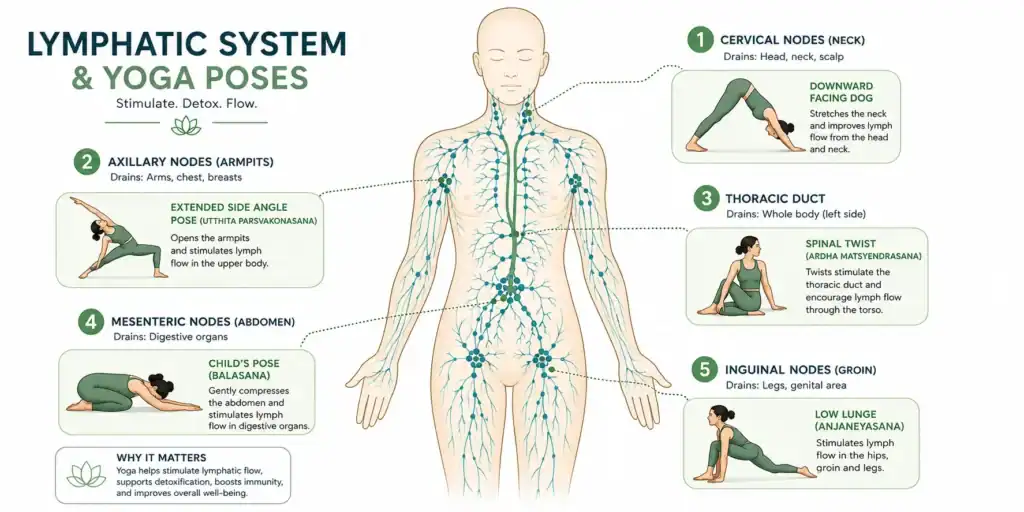
The lymphatic system is the immune system’s transport and surveillance network — a vast web of vessels, nodes, and organs (including the spleen, thymus, and tonsils) through which lymph fluid circulates, carrying immune cells to sites of infection and removing cellular waste and pathogens.
Unlike the cardiovascular system, the lymphatic system has no pump. It relies entirely on three external forces to move fluid:
- Muscular contraction — movement and exercise compress lymphatic vessels, pushing fluid forward
- Respiratory pressure changes — deep breathing creates pressure differentials that draw lymph fluid through the thoracic duct
- Gravitational changes — inversions and position changes assist lymph flow against gravity
Yoga addresses all three simultaneously — making it one of the most comprehensively lymph-activating forms of movement available. Inversions (like Legs Up the Wall and Downward Dog) reverse the gravitational pull on lymphatic fluid, draining pooled lymph from the extremities toward the thoracic duct. Twists compress and release lymphatic tissue in the abdomen. Deep breathwork creates the respiratory pressure changes that drive lymph through the central channels.
Mechanism 3: Gut Microbiome and Mucosal Immunity
Approximately 70–80% of the immune system is housed in the gut-associated lymphoid tissue (GALT) — the immune tissue lining the digestive tract. The health of this immune tissue is directly dependent on the health of the gut microbiome — the trillions of bacteria, fungi, and other microorganisms that inhabit the digestive system.
Chronic stress — through cortisol-driven changes in gut motility, pH, and mucus production — directly damages the gut microbiome and compromises mucosal immunity. Yoga reduces this stress response, protecting gut microbiome integrity.
Additionally, the twisting poses in yoga (Seated Twist, Supine Twist, Revolved Triangle) create a direct mechanical massage of the abdominal organs — stimulating peristalsis, improving digestive motility, and supporting the circulatory environment in which gut immune tissue functions.
Mechanism 4: Inflammation Regulation
Chronic low-grade inflammation — driven by cortisol dysregulation, poor sleep, processed foods, and chronic stress — is the root mechanism in most immune-related conditions including frequent infections, autoimmune flares, allergies, and chronic fatigue.
Yoga reduces key inflammatory markers including:
- IL-6 (Interleukin-6) — a pro-inflammatory cytokine elevated in chronic stress and infection
- TNF-alpha (Tumor Necrosis Factor-alpha) — drives systemic inflammation in autoimmune conditions
- CRP (C-reactive protein) — a primary marker of systemic inflammation
The reduction of these inflammatory markers through consistent yoga practice creates a biological environment in which the immune system can operate with precision rather than being constantly overwhelmed by background inflammation.
12 Best Yoga Poses to Increase Immune System Function: Step-by-Step
These 12 poses are selected for their specific, named immunological mechanisms — not for generic wellness benefits. Each pose is explained with the exact physiological reason it supports immunity, followed by complete step-by-step instructions.
1. Supported Fish Pose (Matsyasana — Supported)
Supported Fish Pose directly stimulates the thymus gland — the primary immune organ responsible for producing and maturing T-lymphocytes (T-cells), which are the adaptive immune system’s most important pathogen-targeting cells.
Why it specifically increases immunity: The thymus gland sits directly behind the sternum (breastbone). In Supported Fish Pose, the passive chest-opening created by the bolster under the thoracic spine creates gentle, sustained pressure against the sternum — directly stimulating thymus activity. This is sometimes called “thymus tapping” in integrative medicine, and the passive, sustained version in this pose is more therapeutically gentle and sustained than percussion-based approaches.
How to do it:
- Place a yoga bolster or rolled blanket horizontally on your mat — it should sit beneath your shoulder blades when you lie back
- Sit in front of the bolster and gently lean back onto it
- The bolster should support your mid and upper back — your head either rests on a blanket or hangs back gently
- Extend your legs straight or bring the soles of your feet together (Reclined Butterfly variation)
- Open your arms out to the sides — palms facing up — in a position of complete openness
- Close your eyes and breathe deeply into your chest
- Feel the sternum lifting gently toward the ceiling with each inhale
Hold: 5–10 minutes
Immune-specific note: The combination of chest opening and diaphragmatic breathing in this pose creates a “lymphatic pump” effect in the thoracic duct — the main lymphatic vessel that drains into the bloodstream near the collarbone. Deep chest breathing literally pumps lymphatic fluid through this duct, accelerating immune cell circulation.
2. Legs Up the Wall (Viparita Karani)
Legs Up the Wall is one of the most potent lymphatic drainage poses in yoga — directly supporting the immune system’s surveillance and transport functions by reversing the gravitational pooling of lymphatic fluid in the lower extremities.
Why it specifically increases immunity: During a normal upright day, lymphatic fluid pools in the legs and feet due to gravity. This pooling slows the circulation of immune cells through the lymphatic system. Elevating the legs reverses this pooling, draining accumulated lymph fluid back toward the thoracic duct and into active circulation — effectively “refreshing” the immune cell supply to the lower body lymph nodes (inguinal and popliteal nodes) and returning depleted lymph to the central circulation for processing.
How to do it:
- Sit sideways next to a wall and swing your legs up as you lower your back to the floor
- Shuffle your hips as close to the wall as comfortable
- Legs rest fully against the wall — no muscular effort required
- Optional: place a folded blanket under your hips to slightly elevate the pelvis — this enhances the lymphatic drain effect
- Arms rest at your sides, palms facing up
- Close your eyes and breathe deeply — extend your exhale to activate the thoracic lymphatic pump
- Feel the sensation of fluid gradually draining from your calves and feet
Hold: 5–15 minutes
Immune-specific note: Practice this pose at the end of any day when you have been on your feet for extended periods — or at the first sign of a cold or viral illness. The lymphatic drainage effect is immediate and measurable as a reduction in leg heaviness and swelling.
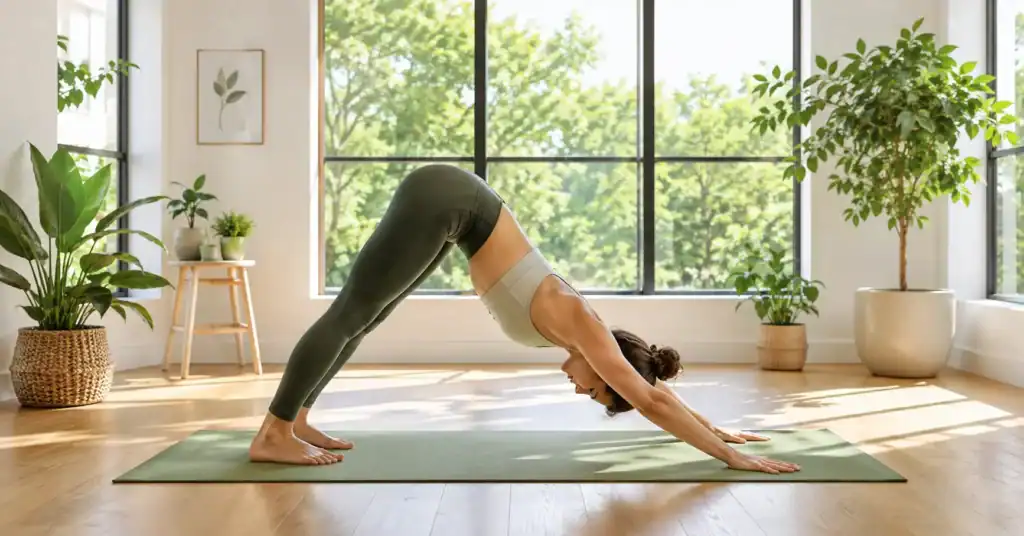
3. Downward Facing Dog (Adho Mukha Svanasana)
Downward Facing Dog is yoga’s most accessible mild inversion — creating simultaneous lymphatic drainage from the legs, improved circulation to the sinuses and upper respiratory lymph nodes, and full-body muscular engagement that drives lymph through the vessels.
Why it specifically increases immunity: The partial inversion of Downward Dog increases blood and lymph flow to the head, neck, and upper respiratory tract — the primary entry points for most respiratory infections. The cervical lymph nodes (in the neck) are a critical first line of immune defense against respiratory pathogens. Improved circulation to these nodes enhances their capacity to detect and respond to infection early.
How to do it:
- Start in tabletop position — hands under shoulders, knees under hips
- Tuck your toes and press through both hands to lift your hips up and back
- Your body forms an inverted V-shape — hips are the highest point
- Press firmly through all ten fingers — especially the index finger and thumb base
- Bend your knees generously if your hamstrings are tight — a long spine with bent knees is correct form
- Let your head hang naturally — ears in line with your upper arms
- Breathe deeply — each inhale expands the chest and drives lymph through the thoracic duct
Hold: 8–10 breaths (repeat 3 times in a session)
Immune-specific note: The rhythmic pressing action of the hands in Downward Dog — pressing and releasing through the palms with each breath — creates a pumping action in the axillary (armpit) lymph nodes, which are a major hub of upper body immune activity.
4. Bridge Pose (Setu Bandha Sarvangasana)
Bridge Pose simultaneously opens the chest (stimulating the thymus), activates the thyroid and parathyroid glands (which regulate immune cell metabolism), and creates core and spinal engagement that drives lymphatic circulation through the abdominal lymph nodes.
Why it specifically increases immunity: The chin-to-chest position created at the throat in Bridge Pose — combined with the chest lift — creates a gentle compression and then release of the thyroid region. The thyroid and parathyroid glands regulate metabolic rate, calcium levels, and importantly, the metabolic activity of immune cells. Mild stimulation of this region supports the efficient functioning of immune cell metabolism.
How to do it:
- Lie on your back with knees bent, feet flat on the mat hip-width apart
- Place your feet close enough that your fingertips can just brush your heels
- Press your feet and arms firmly into the mat
- Inhale — lift your hips toward the ceiling, rolling up one vertebra at a time
- Interlace your fingers under your back and roll your shoulder blades toward each other
- Your chin naturally draws toward your chest — this is the thyroid compression element
- Hold for 8 breaths, then lower slowly on an exhale
Hold: 8 breaths × 3 rounds
Immune-specific note: The abdominal engagement required to hold Bridge Pose compresses the mesenteric lymph nodes — the largest cluster of lymph nodes in the body, located in the mesentery (the membrane supporting the intestines). This compression and release creates a pumping action that drives immune cell circulation through the gut-associated lymphoid tissue.
5. Seated Spinal Twist (Ardha Matsyendrasana)
Seated Spinal Twist is one of yoga’s most targeted poses for gut immunity — directly stimulating the abdominal organs, mesenteric lymph nodes, and the enteric nervous system that governs gut immune function.
Why it specifically increases immunity: The twisting action in Ardha Matsyendrasana creates a compression-and-release of the abdominal organs — the liver, spleen, kidneys, and intestines. The spleen — the largest lymphatic organ in the body — is directly compressed on the left side twist and released on the right. This compression drives old, spent red blood cells and immune debris out of the spleen and stimulates the production and release of fresh immune cells into circulation.
How to do it:
- Sit on your mat with legs extended straight
- Bend your right knee and cross your right foot over your left leg, placing it flat on the floor outside your left knee
- Inhale and lengthen your spine — sit as tall as possible
- Exhale and rotate your torso to the RIGHT
- Place your left elbow on the outside of your right knee — using it as a lever for the twist
- Place your right hand on the floor behind your right hip for support
- With each inhale — lengthen your spine upward. With each exhale — deepen the twist slightly
- Hold for 8–10 breaths, then slowly unwind and repeat on the LEFT side
Hold: 8–10 breaths each side
Immune-specific note: The left-side twist (right foot outside left knee, torso rotating left) specifically targets the spleen — which lies in the upper left quadrant of the abdomen. This is the most immunologically significant direction of this pose. Practice the left-side twist first and hold it slightly longer than the right.
6. Revolved Triangle (Parivrtta Trikonasana)
Revolved Triangle combines a standing spinal twist with a forward fold and lateral extension — creating simultaneous stimulation of the liver, lymphatic compression of the abdomen, and improved circulation to the thoracic lymph nodes.
Why it specifically increases immunity: The liver plays a critical but underappreciated role in immune function — it filters blood-borne pathogens, produces acute-phase proteins (immune mediators), and houses Kupffer cells (specialized liver macrophages that destroy bacteria entering via the portal bloodstream from the gut). Revolved Triangle creates a sustained compression of the right upper abdomen — directly massaging the liver and stimulating its immune filtering function.
How to do it:
- Stand with feet 3–3.5 feet apart
- Turn your right foot out 90° and your left foot in 45°
- Square your hips toward the front (right) foot
- Inhale and extend both arms to a T-shape
- Exhale and hinge forward from the hips — reaching your LEFT hand toward your RIGHT foot (or shin, or a block)
- Extend your right arm straight up toward the ceiling
- Rotate your gaze upward toward your right hand
- Keep your spine long — lead the twist from your thoracic spine, not your lower back
- Hold 5–8 breaths, then switch sides
Hold: 5–8 breaths each side
Immune-specific note: If balance is challenging, use a yoga block under your bottom hand. The spinal rotation — not the depth of the forward fold — is the immunologically active element. A shallower twist with longer spine is more beneficial than a deep fold with a compressed spine.
7. Shoulder Stand (Salamba Sarvangasana) — or Supported Version
Shoulder Stand is traditionally called “the queen of all asanas” — and its primary claim to that title is its powerful effect on the thyroid gland, thymus, and lymphatic circulation through the deep inversion it creates.
Why it specifically increases immunity: The full inversion of Shoulder Stand creates the most significant gravitational reversal of lymphatic fluid available in yoga — draining lymph from the entire lower body and abdomen toward the thoracic duct simultaneously. The firm chin-to-chest position (jalandhara bandha) creates sustained, strong compression of the thyroid region — directly stimulating thyroid metabolism of immune cells. Additionally, the full inversion floods the paranasal sinuses with increased blood flow, enhancing the mucosal immune defense of the upper respiratory tract.
How to do it:
- Lie on your back with a folded blanket under your shoulders (this protects the cervical spine)
- Bend your knees and draw them toward your chest
- Press your palms into the floor beside your hips
- Using your core and arms, lift your hips and then your legs toward the ceiling
- Support your lower back with both hands — elbows on the floor
- Straighten your legs toward the ceiling — body in one vertical line
- Your chin draws toward your chest — this is the thyroid compression (jalandhara bandha)
- Hold for 8–15 breaths, then lower slowly by bending the knees to the chest first
Hold: 8–15 breaths
Beginner modification: Practice Legs Up the Wall (pose 2) instead — it provides many of the same lymphatic benefits without the balance and strength demands of a full inversion.
Avoid if: You have uncontrolled high blood pressure, glaucoma, neck injury, or are in the first days of menstruation.
8. Plow Pose (Halasana)
Plow Pose follows naturally from Shoulder Stand and deepens the thyroid stimulation and thoracic lymphatic drainage — while adding a powerful compression of the abdominal viscera that drives immune cell circulation through the mesenteric lymph nodes.
Why it specifically increases immunity: In Plow Pose, the knees-toward-ears position creates the deepest available compression of the thyroid and cervical lymph nodes. The simultaneous compression of the entire abdominal cavity — as the torso folds forward over the legs — creates a powerful “squeeze” of all abdominal lymphatic tissue, followed by a release when the pose is exited. This compression-release cycle is the most efficient mechanical stimulation of abdominal immune tissue available in yoga.
How to do it:
- From Shoulder Stand, exhale and lower both legs over your head toward the floor behind you
- Your toes may or may not touch the floor — this depends on spinal flexibility
- Keep your hands supporting your lower back OR extend them flat on the floor, fingers interlaced
- Keep your legs straight and strong
- Breathe slowly and deeply — the compressed position makes breathing feel restricted; work with slow, deliberate breaths
- Hold for 5–8 breaths
- To exit: slowly roll down one vertebra at a time — never roll out quickly
Hold: 5–8 breaths
Beginner modification: Keep knees bent and let them rest near the forehead rather than extending legs fully behind. The same thyroid and abdominal compression benefits are available in the modified version.
Avoid if: Any neck pain or injury. Never turn your head in Plow Pose.
9. Camel Pose (Ustrasana)
Camel Pose is the standing counterpart to Supported Fish — creating an active, dynamic opening of the chest and thymus region while simultaneously stretching the entire anterior lymphatic chain from the groin to the throat.
Why it specifically increases immunity: The anterior lymphatic chain — running from the inguinal nodes in the groin, through the abdominal nodes, to the thoracic duct, and up to the cervical nodes in the neck — is stretched fully in Camel Pose. This sustained stretch of the anterior body creates a “flushing” effect along this entire lymphatic pathway, improving the flow of immune cells and lymphatic fluid through the full length of the body’s primary immune surveillance corridor.
How to do it:
- Kneel on your mat, knees hip-width apart
- Place your hands on your lower back, fingers pointing downward
- Inhale and lift your chest toward the ceiling
- Begin to arch backward — lead with the chest, not the lower back
- If comfortable, reach your hands back to your heels (or use blocks beside your feet)
- Let your head drop back gently only if your neck is comfortable
- Breathe deeply into the front of your chest — feel the sternum lifting with each inhale
- Hold 5–8 breaths, then inhale to rise slowly
Hold: 5–8 breaths × 2 rounds
Immune-specific note: Between rounds of Camel Pose, rest in Child’s Pose for 5–8 breaths. This compression-release cycle — Camel (stretch/open) → Child’s Pose (compress/release) — creates a powerful lymphatic pumping action through the anterior chain.
10. Seated Forward Fold (Paschimottanasana)
Seated Forward Fold activates vagal tone — increasing parasympathetic nervous system dominance — which directly restores the immune system’s capacity to produce and deploy immune cells after cortisol-driven suppression.
Why it specifically increases immunity: Vagal tone (the activity level of the vagus nerve — the primary parasympathetic nerve) is one of the most important determinants of immune function. High vagal tone is associated with better regulation of inflammatory cytokines, improved natural killer cell activity, and more balanced immunoglobulin production. Low vagal tone — common in chronically stressed individuals — is associated with immune dysregulation, chronic inflammation, and increased susceptibility to infection.
Forward folds stimulate vagal tone through gentle abdominal compression that activates the vagus nerve’s abdominal branches. Sustained forward folds — held for 5+ minutes — produce measurable increases in heart rate variability (HRV), a clinical marker of vagal tone.
How to do it:
- Sit with legs extended straight, feet flexed
- Inhale and lengthen your spine — sit as tall as possible
- Exhale and hinge forward from the hips — reaching for your feet or using a strap
- Keep your spine as long as possible — avoid collapsing the chest
- With each exhale — feel your belly gently compressing against your thighs
- Extend your exhale to 6–8 counts — this maximizes vagal activation
- Rest your forehead on your legs or a bolster if available
Hold: 15–20 slow breaths (5–7 minutes)
Immune-specific note: The extended exhale (6–8 counts) during this pose is not optional for immune benefit. It is the primary vagal activation mechanism. Shorter holds with normal breathing produce flexibility benefits but significantly less immunological effect.
11. Child’s Pose (Balasana) — Extended Hold
Child’s Pose is yoga’s primary cortisol-reduction posture — and since cortisol suppression of immune function is one of the most significant barriers to immune health, Child’s Pose is one of the most important immune-supporting poses in this entire guide.
Why it specifically increases immunity: Three simultaneous mechanisms operate in extended Child’s Pose:
Vagal activation — the forward fold and abdominal compression stimulate the vagus nerve, reducing cortisol and restoring immune cell production.
Adrenal support — the prone, protective position signals the adrenal glands (which sit above the kidneys, directly against the lower back) to reduce their cortisol output. Long holds in Child’s Pose allow this adrenal signal to develop fully.
Lymphatic drainage — the slight forward tilt of the pelvis in Child’s Pose assists lymphatic drainage from the pelvic lymph nodes toward the abdominal collection cisterns.
How to do it:
- From tabletop, bring your big toes together and widen your knees
- Exhale and sit your hips back toward your heels
- Extend your arms forward on the mat — forehead resting down
- Breathe slowly and deeply into your lower back
- With each exhale — feel your hips sinking heavier toward your heels
- Extend your exhale to 6–8 counts throughout the hold
Hold: 15–20 breaths (4–6 minutes)
Immune-specific note: The adrenal gland signal develops most fully after 4–5 minutes in Child’s Pose. Shorter holds (under 2 minutes) produce relaxation benefits but do not fully activate the adrenal downregulation that is most relevant to immune restoration.
12. Savasana with Yoga Nidra (Corpse Pose + Yogic Sleep)
Yoga Nidra — practiced in Savasana — is the most powerful immune-restorative practice in yoga. It works through a mechanism that no physical pose can replicate: the direct restoration of the immune system during the hypnagogic state.
Why it specifically increases immunity: During the brain-wave state induced by Yoga Nidra (theta waves — between 4 and 8 Hz), the body enters the same neurological state as deep sleep — the phase during which the immune system performs its most critical maintenance functions:
- Cytokine production — immune signaling proteins are produced primarily during sleep and the sleep-adjacent states that Yoga Nidra induces
- Natural killer cell restoration — NK cell activity (which is suppressed by cortisol and poor sleep) is restored during deep rest states
- Immunological memory consolidation — the adaptive immune system consolidates its “library” of pathogen recognition during sleep and deep rest
Studies using EEG confirm that Yoga Nidra induces a theta-dominant brain-wave state — directly producing the neurological conditions for immune restoration without requiring actual sleep.
How to do it:
- Lie flat on your back — arms slightly away from the body, palms up
- Place a bolster under your knees and a blanket over your body
- Close your eyes and take 5 slow, deep breaths
- Begin the body scan — systematically directing awareness to each body part and releasing:
- Right side: foot → calf → knee → thigh → hip
- Left side: foot → calf → knee → thigh → hip
- Abdomen → lower back → chest → upper back
- Right arm → left arm → shoulders
- Throat → jaw → face → forehead → crown
- After completing the scan — rest in open awareness
- Do not try to sleep. Do not try to stay awake. Simply observe.
Hold: 15–30 minutes
Immune-specific note: Yoga Nidra is particularly valuable after illness — during recovery — when the immune system has been heavily deployed and needs restoration. Even a single 20-minute Yoga Nidra session during recovery from a cold or flu provides measurable support for the immune restoration process.
Complete Immune-Boosting Yoga Sequences
Morning Immune Activation Sequence (25 Minutes)
Best for: Starting the day with lymphatic activation and cortisol management
| # | Pose | Hold | Immune Mechanism |
|---|---|---|---|
| 1 | Diaphragmatic breathing | 3 min | Vagal tone activation |
| 2 | Cat-Cow (10 cycles) | 3 min | Lymphatic warm-up |
| 3 | Downward Facing Dog | 3 × 8 breaths | Cervical lymph node circulation |
| 4 | Camel Pose + Child’s Pose cycle | 3 × each | Anterior lymphatic chain |
| 5 | Seated Spinal Twist | 8 breaths each side | Spleen stimulation |
| 6 | Revolved Triangle | 6 breaths each side | Liver immune function |
| 7 | Bridge Pose | 3 × 8 breaths | Thyroid + mesenteric nodes |
| 8 | Supported Fish Pose | 5 min | Thymus stimulation |
| 9 | Savasana | 5 min | Integration |
Evening Immune Restoration Sequence (35 Minutes)
Best for: Restoring immune function depleted by daily stress
| # | Pose | Hold | Immune Mechanism |
|---|---|---|---|
| 1 | Extended exhale breathing (4:8) | 5 min | Cortisol reduction |
| 2 | Child’s Pose | 5 min | Adrenal + vagal restoration |
| 3 | Seated Forward Fold | 7 min | Vagal tone + NK cell restoration |
| 4 | Legs Up the Wall | 10 min | Full lymphatic drainage |
| 5 | Shoulder Stand / Supported | 10 breaths | Thyroid + thymic stimulation |
| 6 | Plow Pose | 5 breaths | Abdominal lymph compression |
| 7 | Supported Fish Pose | 7 min | Thymus + thoracic lymph |
| 8 | Yoga Nidra | 20 min | NK cell + cytokine restoration |
Pranayama for Immune System: 4 Techniques
Breathwork is the fastest available route to immune system support through yoga — faster than any physical pose, accessible even when illness makes movement difficult.
1. Nadi Shodhana (Alternate Nostril Breathing)
Immune mechanism: Balances the autonomic nervous system, reduces cortisol, and improves nasal mucosal immunity by alternately warming and humidifying each nostril.
How to do it: Close right nostril with thumb, inhale left (4 counts). Close both, hold briefly. Close left with ring finger, exhale right (8 counts). Inhale right (4 counts). Close both. Exhale left (8 counts). This is one cycle. Practice 10 cycles.
Immune note: The nasal passages contain the highest concentration of mucosal immunoglobulin A (IgA) in the body. Alternate nostril breathing directly stimulates and warms the nasal immune tissue — improving the first-line mucosal defense against respiratory pathogens.
2. Kapalabhati (Skull-Shining Breath)
Immune mechanism: The rapid abdominal contractions of Kapalabhati create a high-frequency compression of the abdominal lymph nodes — acting as a mechanical pump for the lymphatic system.
How to do it: Sit tall. Take a full inhale. Then perform rapid, forceful exhales through the nose — each driven by a sharp contraction of the lower abdomen. The inhale is passive. Start with 30 contractions, rest, then repeat 3 rounds.
Avoid if: Pregnant, during menstruation, with high blood pressure, or with any abdominal hernia.
Immune note: Kapalabhati also generates significant heat (hence “skull-shining”) — elevating core temperature mildly. Mild hyperthermia has been shown to directly enhance natural killer cell activity and interfere with the replication of some respiratory viruses.
3. Bhramari (Humming Bee Breath)
Immune mechanism: The vibration created by Bhramari stimulates the production of nitric oxide (NO) in the sinuses. Nitric oxide is a potent antiviral and antibacterial agent produced by the nasal and sinus mucosa that directly kills inhaled pathogens.
How to do it: Sit comfortably. Close your ears with your thumbs. Place fingers gently over eyes and face. Inhale fully. On the exhale — make a sustained humming sound (“mmmm”) feeling the vibration in your skull and sinuses. Repeat 5–10 times.
Immune note: Research has shown that humming increases nasal nitric oxide concentration by up to 15-fold compared to quiet breathing. This is a direct, measurable antiviral mechanism — not a metaphor.
4. Ujjayi (Victorious Breath / Ocean Breath)
Immune mechanism: The mild constriction at the throat in Ujjayi breathing creates a slight back-pressure in the respiratory system — improving the distribution of inhaled air throughout the lung fields, including the lower lobes where most gas exchange (and therefore oxygen delivery to immune cells) occurs.
How to do it: Breathe in and out through the nose with a slight constriction at the back of the throat — as if fogging a mirror with a closed mouth. The result is a soft, ocean-like sound. Practice throughout the physical yoga sequence.
What the Research Shows: Yoga and Immune Markers
The following are measurable immunological improvements documented in research on regular yoga practice:
| Immune Marker | What It Measures | Effect of Yoga |
|---|---|---|
| Natural killer cell activity | First-responder immune cells | Significantly increased |
| Salivary IgA | Mucosal antibody defense | Increased after single session |
| IL-6 levels | Pro-inflammatory cytokine | Significantly reduced |
| TNF-alpha | Systemic inflammation marker | Reduced in regular practitioners |
| Cortisol | Primary immune suppressor | Measurably reduced |
| Heart rate variability (HRV) | Vagal tone / immune regulation | Improved with consistent practice |
| CRP (C-reactive protein) | Systemic inflammation | Reduced in 8–12 week studies |
Research published by the National Center for Biotechnology Information confirms yoga’s role in autonomic regulation and its downstream immunological effects. (Read the research)
Yoga for Immunity: Lifestyle Factors That Amplify Results
Yoga is most effective for immune system support when practiced alongside:
Sleep: The immune system performs its most critical restoration work during sleep. Our Yoga Poses for Sleep guide covers the specific poses that improve sleep quality most directly — each of which provides compounded immune benefit.
Anti-inflammatory nutrition: Reducing processed foods, refined sugar, and alcohol while increasing omega-3 fatty acids, colorful vegetables, and fermented foods (which support gut microbiome health) amplifies yoga’s anti-inflammatory immune effects significantly.
Consistent practice: Immune benefits from yoga are cumulative — they compound with each session and deteriorate with inconsistency. Three sessions per week maintain baseline benefit; five sessions per week produce measurable immunological improvements within 8–12 weeks.
Stress boundary-setting: Yoga reduces cortisol during and after practice — but chronic stress exposure between sessions continuously re-elevates it. The practice is most effective when combined with genuine attention to chronic stress sources in daily life.
Conclusion
Your immune system is not a fixed thing. It is a dynamic, responsive biological network — one that strengthens with the right inputs and weakens with the wrong ones.
Chronic stress. Poor sleep. Shallow breathing. Sedentary days. These are the inputs that gradually erode immune function — not dramatically, but steadily, over months and years — until one day you realize you’re sick more often, recovering more slowly, and running on a fraction of the energy you used to have.
Yoga to increase immune system function works in the opposite direction — steadily, cumulatively, session by session.
Each time you hold Legs Up the Wall, you drain the lymphatic pooling that accumulated during the day. Each time you practice Seated Spinal Twist, you compress and refresh the spleen. Each time you hold Supported Fish Pose, you send a gentle signal to the thymus gland. Each time you extend your exhale, you reduce the cortisol that was suppressing your natural killer cells.
None of this requires perfection. None of it requires flexibility or strength or prior experience.
It requires a mat, a consistent commitment, and the understanding that immunity is not something you build in a day — but something you restore and strengthen with every single practice.
Start today. Practice tomorrow. And the day after that. Visit TheShivYoga.com and build your immune practice with us.
Disclaimer: This article is for informational and educational purposes only. It does not constitute medical advice. Yoga is a complementary practice and is not a substitute for medical treatment, vaccination, or the guidance of a qualified healthcare provider. If you have an immune condition, autoimmune disease, or are currently ill, always consult your healthcare provider before beginning or modifying a yoga practice.
Key Takeaways
- Yoga increases immune system function through four measurable mechanisms: cortisol reduction, lymphatic stimulation, gut microbiome support, and systemic inflammation reduction.
- Cortisol is the primary enemy of immune function — and yoga is one of the most effective non-pharmaceutical cortisol-reduction tools available.
- The lymphatic system has no pump — it depends on movement, breath, and gravity. Yoga addresses all three simultaneously, making it uniquely effective for lymphatic immune support.
- Inversions (Legs Up the Wall, Shoulder Stand) drain pooled lymphatic fluid from the extremities — directly refreshing the immune cell supply to peripheral lymph nodes.
- Twists (Seated Spinal Twist, Revolved Triangle) compress the spleen and liver — the two most immunologically active abdominal organs.
- Chest openers (Supported Fish, Camel) stimulate the thymus gland — the primary factory for T-lymphocyte immune cells.
- Bhramari pranayama increases nasal nitric oxide by up to 15-fold — providing a direct, measurable antiviral mechanism.
- Yoga Nidra induces the theta brain-wave state where cytokine production and natural killer cell restoration occur — making it the most restorative immune practice in yoga.
- Consistent practice of 4–5 sessions per week produces measurable improvements in natural killer cell activity, immunoglobulin levels, and inflammatory markers within 8–12 weeks.
FAQ Section
Q1: How long does it take for yoga to improve immune system function?
Measurable improvements in immune markers — including reduced cortisol, increased salivary IgA, and improved natural killer cell activity — have been documented within 8–12 weeks of consistent yoga practice (4–5 sessions per week). Some markers, including salivary IgA (mucosal antibody defense), show measurable improvement after a single yoga session. Sustained, cumulative immune benefits require consistent long-term practice.
Q2: Which yoga poses are best for boosting the immune system?
The most immunologically effective yoga poses are inversions (Legs Up the Wall, Shoulder Stand) for lymphatic drainage, chest openers (Supported Fish, Camel) for thymus stimulation, twists (Seated Spinal Twist, Revolved Triangle) for spleen and liver immune function, and forward folds (Seated Forward Fold, Child’s Pose) for vagal tone and cortisol reduction. Combine all four categories for comprehensive immune support.
Q3: Is yoga good for autoimmune conditions?
Gentle, restorative yoga is generally considered beneficial for autoimmune conditions — primarily through its cortisol-reducing and anti-inflammatory effects. However, autoimmune conditions are highly individual in their triggers and management. Always consult your rheumatologist or specialist before beginning yoga for an autoimmune condition. Avoid vigorous, heating yoga styles during active flares.
Q4: Can pranayama alone boost the immune system without physical yoga poses?
Yes — pranayama independently produces measurable immune benefits. Bhramari (humming breath) increases nasal nitric oxide by up to 15-fold, providing direct antiviral protection. Nadi Shodhana reduces cortisol and balances autonomic function. Kapalabhati mechanically pumps abdominal lymph nodes. For people unable to perform physical yoga poses due to illness or injury, a 20-minute pranayama practice delivers significant immune support.
Q5: Is yoga safe to practice when sick?
Gentle yoga — diaphragmatic breathing, extended Savasana, and Yoga Nidra — is generally safe and supportive during mild illness. Vigorous yoga, inversions, and heating practices should be avoided during active fever or systemic illness, as they place additional metabolic demand on an already-taxed system. Rest, hydration, and Yoga Nidra are the most appropriate yoga practices during active illness. Return to the full immune sequence during recovery.

