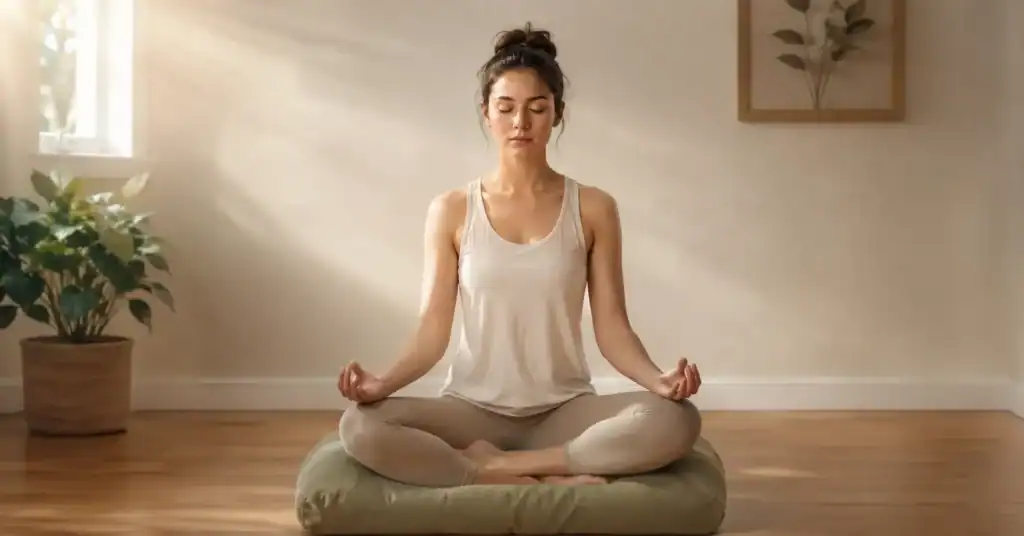
⚡ Quick Answer
Zen meditation, called zazen in Japanese, is a seated practice of upright posture, steady breathing, and open, non-judgmental awareness. Traditionally rooted in Chan Buddhism, it trains attention rather than emptying the mind. Beginners can start with just 10 minutes daily by counting breaths from one to ten, sitting on a cushion or chair with a straight spine and relaxed gaze.
Most people who try meditation for the first time sit down, close their eyes, and wait for their mind to go quiet. Within a minute, it becomes clear that a quiet mind is not something you can switch on.
Zen meditation approaches this problem differently. Instead of trying to stop thoughts, zen practice asks you to sit upright, settle the body, and observe whatever arises without chasing it. Over time, this simple method trains attention, steadies emotion, and builds a calm relationship with your own mind.
This guide explains what zen meditation is, where it came from, what the research says about its benefits, and how to practice zazen step by step at home. It also corrects the most common myths, so you start with accurate expectations.
Whether you are a yoga student looking to add a seated practice or a complete beginner who has never meditated, this article gives you a clear starting point.
What Is Zen Meditation?
Zen meditation is a form of seated Buddhist meditation in which the practitioner sits with an upright spine, follows the breath or simply rests in awareness, and returns attention whenever it wanders. The Japanese word for this practice is zazen, which translates roughly to “seated meditation.”
The word “zen” comes from the Japanese pronunciation of the Chinese word chan, which itself derives from the Sanskrit dhyana, meaning meditative absorption. This connection is useful because it shows that zen meditation grew out of the same root as the seventh limb of classical yoga, dhyana (meditation), described in the 8 limbs of yoga.
Zen meditation has three defining features:
- Posture first: The body is stable, upright, and relaxed before the mind is asked to settle.
- Breath as anchor: Attention rests on the breath, either by counting or by simply noticing it.
- Returning, not controlling: When thoughts appear, the practitioner notices them and gently returns to the anchor. The return is the practice.
Origins: From China to Japan
Zen meditation developed through a lineage that moved from India to China and then to Japan.
Buddhist meditation spread from India into China, where it merged with Daoist ideas and developed into Chan Buddhism during the early centuries of the Common Era. Tradition credits the monk Bodhidharma with bringing this meditative lineage to China, although historians debate the details of his life.
Chan teachings reached Japan in the twelfth and thirteenth centuries. The most influential figure in shaping Japanese zen was the teacher Dōgen (1200–1253), who founded the Sōtō school. In his short text Fukanzazengi (Universal Recommendation for Zazen), written in 1227, Dōgen gave instructions on posture, breathing, and the mental attitude of sitting. These instructions remain the foundation of zazen practice in Sōtō monasteries today.
Two main schools of Japanese zen continue to this day:
| School | Founder or Key Figure | Main Practice | Typical Emphasis |
|---|---|---|---|
| Sōtō Zen | Dōgen (1200–1253) | Shikantaza (just sitting) | Ongoing awareness without a fixed object |
| Rinzai Zen | Eisai (1141–1215) | Kōan study | Working with paradoxical questions |
Three Main Zen Meditation Styles
The practice of zen meditation takes several forms. Beginners usually start with breath counting, then move toward the other styles as their attention becomes steadier.
Breath Counting (Susokukan)
Breath counting is the most common starting method. The practitioner counts each exhalation from one to ten, then begins again at one. If the count is lost, the practitioner returns to one without self-criticism. This method gives the mind a simple task and makes distraction easy to notice.
Shikantaza (Just Sitting)
Shikantaza is the Sōtō practice of sitting with open, choiceless awareness. There is no counting and no fixed object of attention. The practitioner remains alert, aware of sounds, body sensations, and thoughts as they arise and pass, without grasping or pushing them away. Shikantaza is generally practiced after breath counting has built a stable foundation.
Kōan Practice
A kōan is a short paradoxical statement or question, such as “What is the sound of one hand?” In Rinzai Zen, students work with a kōan in sustained meditation, often under the guidance of a teacher. The purpose is not to find a logical answer but to exhaust the thinking mind so that direct insight can emerge. Kōan practice is usually introduced with a qualified teacher rather than self-taught.
Zen Meditation vs Mindfulness
Zen meditation and mindfulness meditation share common roots in Buddhist practice, but they differ in emphasis and method.
| Feature | Zen Meditation (Zazen) | Mindfulness Meditation (Modern Western Form) |
|---|---|---|
| Origin | Chan and Japanese Zen Buddhism | Vipassanā tradition, adapted in the 1970s by Jon Kabat-Zinn |
| Posture | Strict emphasis on upright seated posture | Flexible; chairs, lying down, or walking common |
| Main method | Breath counting, shikantaza, or kōan | Body scan, breath focus, labeling thoughts |
| Religious context | Rooted in Buddhist monasteries and teaching | Often taught as a secular stress-reduction practice |
| Typical session | 20–40 minutes in monastery settings | 10–45 minutes, depending on the program |
Both approaches train attention and awareness. Zen places more weight on posture and on the quality of simply sitting, while mindfulness programs often provide more structured guided instructions.
Research-Backed Benefits of Zen Meditation
Zen meditation has been studied mainly through the broader category of mindfulness and sitting meditation. The most consistent findings relate to stress, attention, and emotional regulation.
Brain structure changes: In a 2005 study published in NeuroReport, researcher Sara Lazar and colleagues at Harvard found that long-term meditators had greater cortical thickness in brain regions linked to attention and sensory processing compared with non-meditators. The study was observational, so it shows an association rather than proof of cause.
Changes after eight weeks: Hölzel and colleagues (2011), publishing in Psychiatry Research: Neuroimaging, reported increases in gray matter density in the hippocampus, a region involved in learning and memory, among participants who completed an eight-week mindfulness program. The sample was small, so the results should be confirmed by larger studies.
Anxiety, depression, and pain: A 2014 meta-analysis by Goyal and colleagues in JAMA Internal Medicine reviewed 47 trials of mindfulness meditation programs. The authors reported moderate evidence for improvements in anxiety, depression, and pain, with small effect sizes. The authors found low evidence for effects on stress and quality of life.
In practical terms, zen meditation tends to help people notice stress earlier, pause before reacting, and sustain attention for longer periods. It is a supportive practice, not a substitute for medical treatment.
Step-by-Step Guide to Zazen
Zazen can be practiced on a cushion, a bench, or a chair. The steps below describe a basic 10-minute session for beginners.
Step 1: Choose a Quiet Place and Set a Timer
Pick a space with minimal noise and interruption. Set a timer for 10 minutes so that you do not need to check the clock. Beginners should start with 5 to 10 minutes and build gradually toward 20 to 30 minutes over several weeks.
Step 2: Sit With a Stable Base
Sit on a firm zafu cushion so that the hips rest slightly higher than the knees, or sit on a chair with both feet flat on the floor. The base should feel steady, not tense. A stable base makes it easier for the body to stay still for the full session.
Step 3: Align the Spine
Keep the spine tall, as if a thread pulls the crown of the head upward. Tuck the chin slightly so the back of the neck lengthens. Keep the shoulders relaxed and the chest open. Upright posture supports alertness and reduces drowsiness.
Step 4: Place the Hands in the Cosmic Mudra
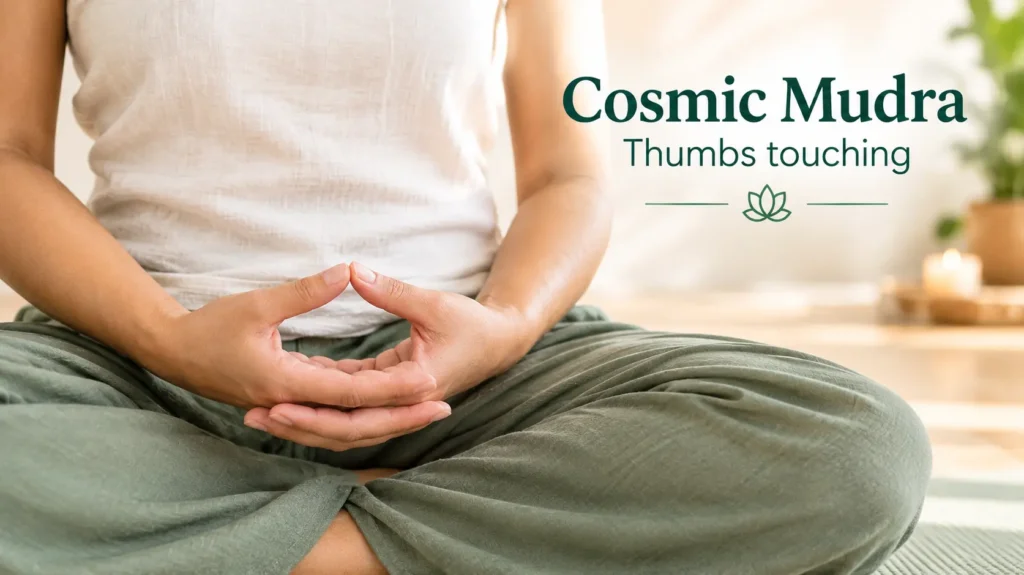
Rest the right hand on the left palm, fingers relaxed, with the thumb tips lightly touching to form an oval shape in the lap. This hand position is called the cosmic mudra (hokkai jōin). Keep the elbows slightly away from the body so the arms form a soft arc.
Step 5: Soften the Eyes and Mouth
Let the eyes remain half open, with the gaze resting downward about one meter in front of you. Keep the mouth closed and the tongue resting gently against the roof of the mouth. Softening the face helps the mind settle without drifting into sleep.
Step 6: Begin Breath Counting
Breathe naturally through the nose. Count each exhalation silently, from one to ten. After ten, begin again at one. If you lose count, or find that you have counted past ten or are thinking about something else, return to one without judgment. Beginners often lose count dozens of times in a single session, and this is normal.
Step 7: Return When You Wander
Each time you notice that your attention has moved to a thought, sound, or feeling, label it briefly as “thinking” or “sound” if that helps, and return to the breath count. The act of noticing and returning is the core of zazen. Each return strengthens attention.
Step 8: End the Session Mindfully
When the timer sounds, let the breath move freely for a few moments. Place both hands on the thighs, open the eyes fully, and rock gently from side to side before standing. Standing up slowly prevents lightheadedness or stiffness, especially after longer sessions.
Posture Options for Zen Meditation
| Posture | How to Set Up | Best For |
|---|---|---|
| Burmese (cross-legged) | Sit on a cushion with knees touching the floor and feet tucked in front | Flexible hips, beginners with stable knees |
| Seiza (kneeling) | Kneel on a mat with a bench or cushion between the calves and thighs | Practitioners who want an upright seated base |
| Half lotus | One foot placed on the opposite thigh, the other tucked underneath | Experienced practitioners with open hips |
| Chair sitting | Sit on the front edge of a firm chair with feet flat and spine upright | Knee pain, back issues, or limited mobility |
Modifications for Different Bodies
Zazen does not require any particular body shape. The principle is that the body must be stable and comfortable enough to sit without distraction.
Tight hips or limited flexibility: Sit on a folded blanket or a higher cushion so the hips sit above the knees. Use a chair if the floor position causes discomfort.
Knee sensitivity: Avoid seiza and full cross-legged postures. Choose a chair with the feet flat on the floor and a folded blanket beneath the sit bones.
Lower back pain: Place a rolled towel behind the lower back, or sit with the back against a wall. The spine should remain upright, but never rigid.
Shoulder or neck tension: Keep the arms supported with a cushion on the lap. Let the head rest in a neutral position rather than dropping forward.
Limited balance: Sit in a chair with a backrest, keeping both feet on the floor. Stability matters more than traditional form.
Recovering from an injury: Discuss your practice with a physical therapist or doctor first. Chair-based sitting with short sessions is usually the safest starting point.
Common Mistakes in Zen Meditation
1. Trying to stop all thoughts. Thoughts will arise throughout the session. Zazen trains you to notice them and return, not to eliminate them. Treat thinking as weather passing through, not as a failure.
2. Sitting with a slumped or rigid spine. Slumping makes the mind drowsy, while rigidity creates tension. Aim for a tall, relaxed upright position.
3. Forcing the breath. The breath should remain natural and unforced. Deep, controlled breathing can create tension, so simply observe the breath as it is.
4. Judging the session as good or bad. Some sessions feel calm and others feel restless. Both are part of practice. Judging sessions adds a layer of struggle that the practice does not require.
5. Practicing too long too soon. Starting with 45 minutes often leads to frustration or physical pain. Short, consistent sessions build a stronger foundation than occasional long ones.
When to Practice Zen Meditation
Consistency matters more than session length. Most beginners find that a fixed time each day creates a reliable habit.
Morning (before the day begins): Practicing zazen before checking phones or messages sets a calm tone and reduces reactivity during the day. Ten minutes after waking is enough for most people.
Midday reset: A five-minute session at lunch or between meetings can help interrupt stress and restore attention.
Evening wind-down: Sitting zazen two to three hours before bed can help settle the mind. Avoid intense sessions immediately before sleep, as an alert mind may make falling asleep harder.
Pairing with yoga: Practice a few gentle yoga poses first to loosen the hips and spine, then sit for zazen. Our guide to the 8 limbs of yoga explains how seated meditation fits into the larger yoga tradition.
Contraindications and When to Seek Support
Zen meditation is safe for most adults, but some situations call for care.
Pause and consult a professional if: You have a history of trauma or dissociation, and sitting in silence brings up distressing memories or feelings. Work with a qualified therapist and a teacher who understands trauma-informed practice.
Modify rather than force if: You experience sharp pain in the knees, back, or hips during sitting. Change posture or switch to a chair.
Seek medical advice if: You experience dizziness, chest discomfort, or unusual symptoms during or after practice.
Zen meditation does not replace treatment. If you have depression, anxiety, or another mental health condition, meditation can be a helpful complement to professional care, but it should not replace it.
Misinformation Inoculation: Myths About Zen Meditation
Several common claims about zen meditation are inaccurate. Correcting them early helps you practice with realistic expectations.
Myth 1: Zen meditation is a religion you must join. Zen is a Buddhist tradition, and many people practice zazen within religious settings. However, you do not need to adopt Buddhist beliefs to sit zazen. Secular and religious practitioners both use the technique, and many modern programs teach it without any religious content.
Myth 2: Zen meditation empties the mind. Zazen does not aim to stop thinking. It trains you to notice thoughts without being carried away by them. Thoughts continue to appear, but attention becomes more stable over time.
Myth 3: Zen meditation cures anxiety or depression. Research supports moderate benefits for anxiety and depression symptoms in mindfulness-based programs, but zen meditation is not a cure. It works best as a complement to professional care.
Myth 4: Enlightenment comes quickly. In Zen tradition, awakening is often described as unpredictable and gradual. Many teachers emphasize steady practice over dramatic experiences. Expecting a sudden breakthrough often creates frustration.
Myth 5: You must sit in full lotus to benefit. Posture matters for stability, but the classical instructions emphasize comfort and balance. A chair is a fully valid option.
Key Takeaways
- Zen meditation (zazen) is a seated practice built on upright posture, steady breathing, and open, non-judgmental awareness.
- The word zen traces back to the Chinese chan and the Sanskrit dhyana, which means meditative absorption.
- Zen developed in China as Chan Buddhism and reached Japan in the twelfth and thirteenth centuries.
- Dōgen’s Fukanzazengi (1227) remains a foundational text for posture and attitude in zazen.
- The three main styles are breath counting (susokukan), shikantaza (just sitting), and kōan practice.
- Research links mindfulness-style sitting practice to moderate improvements in anxiety, depression, and pain symptoms, with modest effect sizes.
- Zen meditation does not aim to empty the mind. It trains you to notice thoughts and return to an anchor.
- Beginners should start with 5 to 10 minutes daily and build gradually to 20 to 30 minutes.
- A chair is a fully valid posture, and modifications are part of the practice, not a failure of it.
- Zen meditation complements professional care for anxiety and depression. It does not replace it.
- Consistency every day matters more than the length of any single session.
Conclusion
Most people who try meditation expect a quiet mind on the first attempt. Zen meditation offers a more honest starting point: sit upright, breathe, and notice what is already there.
Zazen has been practiced for centuries in monasteries, and it now fits comfortably into a modern day. Ten minutes at dawn, a short reset at lunch, or a calm session before bed can all build the same skill of returning attention to the present moment.
The research is encouraging but measured. Sitting meditation can support attention, stress management, and emotional steadiness, and it works best as part of a balanced life that includes movement, rest, and professional care when needed.
The first step is simple. Find a stable seat, set a timer for ten minutes, and count your breath from one to ten. When you lose count, return to one. That return is the practice.
Zen meditation is not about becoming someone else. It is about sitting with who you already are. Begin today, and visit TheShivYoga.com to practice with us.
Note: This article draws on Buddhist teachings, classical Zen texts, and peer-reviewed research. Historical dates for Chan and Zen lineages are approximate and reflect scholarly consensus. Research findings describe average effects in study populations and do not guarantee individual outcomes.
Frequently Asked Questions
Q1. What is the difference between zen meditation and mindfulness?
Zen meditation (zazen) is a Buddhist seated practice with a strong emphasis on upright posture and breath counting or open awareness. Mindfulness meditation is a broader category, often taught in secular programs, that includes body scans and guided practices. Both train attention, but zen places more weight on traditional posture and method.
Q2. How long should a beginner sit for zen meditation?
Start with 5 to 10 minutes daily. Increase gradually to 20 to 30 minutes over several weeks as attention and comfort improve. Consistency every day is more valuable than occasional long sessions.
Q3. Is zen meditation a religion?
Zen is a school of Buddhism, so its origins are religious. However, many people practice zazen purely as a meditation technique without adopting Buddhist beliefs. Both approaches are common today.
Q4. Can zen meditation help with anxiety?
Research on mindfulness-based practices suggests moderate benefits for anxiety symptoms. Zen meditation can support emotional regulation, but it should complement, not replace, professional treatment for an anxiety disorder.
Q5. What is the best posture for zen meditation with knee pain?
Sit in a chair with both feet flat on the floor and the spine upright. Keep the knees comfortable and avoid kneeling or full cross-legged postures until the pain is resolved.