⚡ Quick Answer
Gentle yoga poses that help acid reflux include supported Child’s Pose, seated Vajrasana after meals, reclining spinal twist, Cat-Cow, reclined bound angle, and left-side Savasana, combined with diaphragmatic breathing. These poses reduce abdominal pressure and calm the stress response that can worsen heartburn. Avoid full inversions like Headstand, deep forward folds right after eating, and intense abdominal crunches. Yoga supports reflux management but does not replace medical treatment.
Heartburn has a way of showing up at the worst moments. It might arrive an hour after dinner, during a stressful workday, or just as you lie down to sleep. For the estimated millions of adults who experience gastroesophageal reflux disease (GERD), acid rising into the chest and throat is a regular and draining part of life.
Yoga is often suggested as a natural companion to medical care for reflux. The question most readers ask is simple: which yoga poses for acid reflux are actually helpful, and which ones make it worse? The answer depends on pose selection, timing, and breath.
This guide covers eight gentle poses that many people with reflux find comfortable, four practices to avoid, a step-by-step routine you can start today, safe modifications for different bodies, and the warning signs that mean you should see a doctor before rolling out your mat.
Every recommendation here is grounded in how the digestive system works, what established medical bodies say about reflux management, and what the limited yoga research actually shows. Where evidence is thin, this article says so.
Does Yoga Actually Help Acid Reflux?
Yoga can ease acid reflux symptoms indirectly, mainly by reducing stress, improving posture after meals, and slowing the breath, but it does not cure GERD. Reflux happens when the lower esophageal sphincter (LES), a ring of muscle at the bottom of the esophagus, relaxes at the wrong time and lets stomach contents travel upward.
Yoga cannot change the anatomy of that valve. What it can influence are the factors that often make symptoms worse: abdominal pressure, slumped posture, shallow chest breathing, and a stressed nervous system that slows digestion.
Here is what the evidence currently supports:
- The American College of Gastroenterology (ACG) 2022 GERD guideline recommends lifestyle changes as a foundation of reflux management, including weight management, meal timing, head-of-bed elevation, and avoiding trigger foods. It does not list yoga as a standalone treatment.
- Small studies and reviews suggest that mind-body practices, including yoga and relaxation-focused breathing, may reduce reflux symptoms and improve quality of life. These trials are generally small and short, so the findings are preliminary.
- The National Institute of Diabetes and Digestive and Kidney Diseases (NIDDK) notes that many people manage mild reflux through lifestyle changes, but persistent symptoms need medical evaluation.
Misinformation Inoculation: Yoga does not “heal” the esophagus, “flush out” acid, or reset stomach pH. Any website that promises a pose will cure reflux permanently is overstating what the research supports. Use yoga as one part of a broader plan.
The 8 Gentle Poses That Support Reflux Relief
The poses below share three features: they keep the torso upright or supported, they avoid pressing into the abdomen, and they pair movement with slow breathing. Each pose works as a self-contained answer for someone looking for a specific option.
Supported Child’s Pose (Balasana with a Bolster)
Supported Child’s Pose helps reflux by letting the abdomen rest while the forehead and chest settle onto a bolster or stacked pillows. The soft support reduces pressure on the stomach compared with a standard deep fold, and the slow exhale encourages the parasympathetic response that calms digestion. For a full alignment breakdown, read our guide to Balasana (Child’s Pose).
Seated Thunderbolt Pose (Vajrasana)
Vajrasana is a kneeling seat that keeps the spine upright, which works with gravity to keep stomach contents low in the digestive tract. Traditional yoga teachers often recommend it after meals, and it is one of the few seated postures that most people can practice soon after eating. Start with two to three minutes, using a folded blanket under the hips if the knees feel strained.
Cat-Cow Stretch (Marjaryasana–Bitilasana)
Cat-Cow gently mobilizes the spine and diaphragm without compressing the abdomen. Moving slowly through the arch and round, and coordinating each movement with the breath, encourages the diaphragm to move freely. Keep the movement small and comfortable, and avoid lifting the head forcefully in the cow phase.
Reclining Bound Angle Pose (Supta Baddha Konasana)
Supported Reclining Bound Angle opens the hips and chest while the torso stays relatively open, which many people find calming on a stressful day. Place a bolster or cushions behind the upper back so the chest stays higher than the stomach. Rest here for three to five minutes while breathing slowly into the belly and lower ribs.
Reclining Spinal Twist (Supta Matsyendrasana)
The lying-down spinal twist offers a gentle rotation without the sitting compression of seated twists. Lying on the back can aggravate reflux for some people, so practice this pose earlier in the day, at least two to three hours after eating, and keep the twist soft. Stop immediately if it increases burning or pressure.
Standing Side Stretch (Tadasana with Lateral Bend)
Standing side stretches lengthen the intercostal muscles between the ribs and open the side body, which supports fuller diaphragmatic breathing. Keep the torso upright and avoid bending forward at the waist. Reach one arm overhead, lean gently to the opposite side, and hold for five breaths on each side.
Gentle Forward Fold with a Chair (Seated or Supported Folding)
A supported forward fold, with the torso resting on a chair or table, lowers stress without the strong abdominal compression of a standing forward bend. Keep the head at or above heart level. This variation suits people who need forward movement but notice symptoms with deep folds.
Left-Side Savasana (Parsva Savasana)
Left-side Savasana is a resting pose that deserves attention for nighttime reflux. Some research suggests that lying on the left side may reduce the frequency of reflux episodes compared with lying on the right, likely because of how the stomach and esophagus align. Lie on your left side with a pillow under the head and another between the knees, and rest for five to ten minutes. Use it as a wind-down practice, not a replacement for elevating the head of the bed.
The 4 Poses and Practices to Avoid
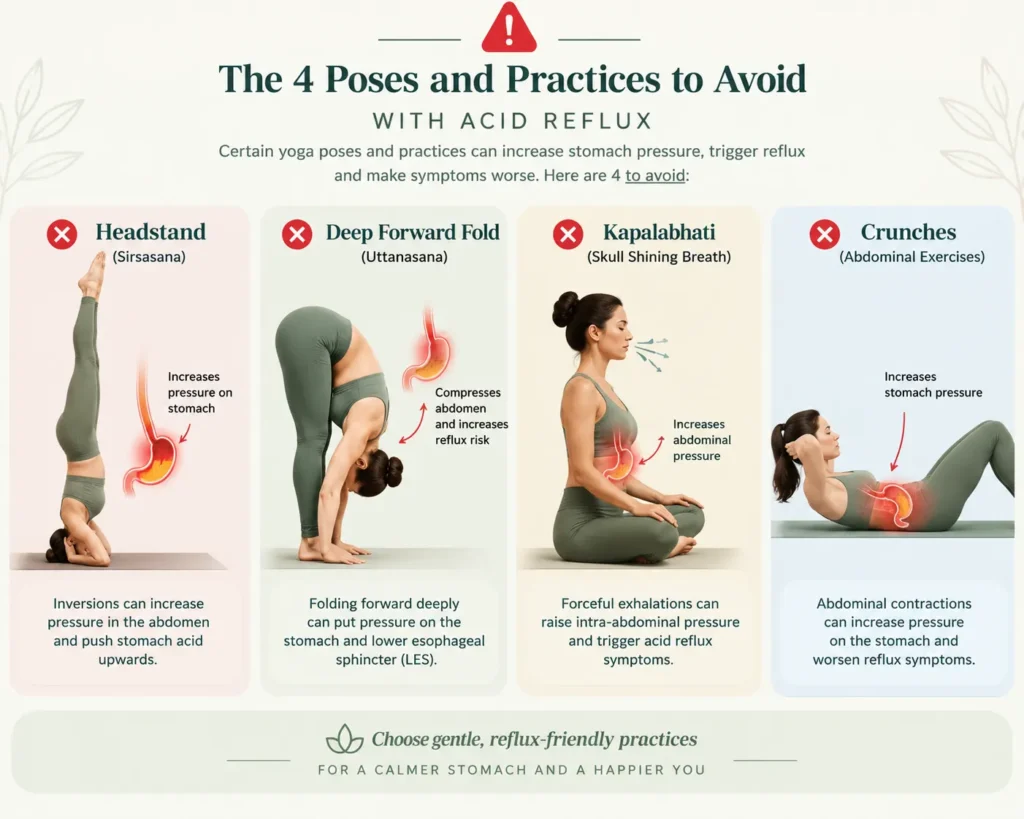
Certain poses and breathing practices increase intra-abdominal pressure or position the stomach above the esophagus, which can push acid upward. These are the four categories to avoid, especially during active symptoms.
1. Full Inversions (Headstand, Shoulder Stand, Plow)
Full inversions turn the body upside down, which allows stomach contents to flow toward the esophagus. Headstand (Sirsasana), Shoulder Stand (Sarvangasana), and Plow (Halasana) all compress the abdomen while the head sits below the hips. Many people with reflux notice symptoms within minutes of holding these poses.
Misinformation Inoculation: The claim that inversions “help digestion” and therefore help reflux is a common myth. While some practitioners use gentle inversions for general wellbeing, full inversions increase the chance of reflux, particularly after a meal.
2. Deep Forward Folds Immediately After Eating
Deep forward folds such as standing Uttanasana or seated Paschimottanasana compress the stomach and press acid toward the esophagus. Wait at least two to three hours after a meal before practicing deep forward bends, and choose supported variations in the meantime.
3. Forceful Breathing Practices
Kapalabhati (skull-shining breath) and Bhastrika (bellows breath) rely on rapid, forceful exhalation from the abdomen. These pump the diaphragm vigorously and can push acid upward. Traditional texts recommend them for energy and digestion, but for active reflux, slow breathing is the safer choice. Read our article on the benefits and cautions of Bhastrika Pranayama for more detail.
4. Intense Abdominal Work and Crunch-Style Core Exercises
Boat Pose at full intensity, repeated abdominal crunches, and heavy core flows create significant abdominal pressure. Strong core work is valuable, but it is best scheduled earlier in the day and well away from meals, or modified with slower, lower-effort variations until symptoms settle.
A Step-by-Step Guide to a Reflux-Friendly Yoga Routine
This routine takes 15 to 20 minutes and works best when practiced two to three hours after a meal, or at a consistent time of day when symptoms are typically calm. Move slowly, breathe continuously, and stop any movement that increases burning or pressure.
Step 1: Choose the right time and set up your space. Practice at least two to three hours after your last meal. Place a yoga mat, a bolster or two firm pillows, a folded blanket, and a chair nearby. Wear clothing that does not compress the waist.
Step 2: Begin with a seated breath reset (2–3 minutes). Sit cross-legged on a folded blanket with the spine tall. Place one hand on the upper chest and the other on the lower belly. Inhale through the nose so the belly expands, then exhale slowly through the nose for twice as long. Repeat for two minutes. This is diaphragmatic breathing, the foundation of the routine.
Step 3: Move into Cat-Cow (5 rounds). Come onto hands and knees with wrists under shoulders and knees under hips. Inhale to lift the chest and tailbone into a gentle arch. Exhale to round the spine and tuck the chin. Move slowly and stay within a comfortable range.
Step 4: Rest in Supported Child’s Pose (1–3 minutes). Sit back toward the heels and walk the torso forward. Place a bolster or stacked pillows under the chest so the stomach is supported, not compressed. Rest the forehead on the support and breathe into the back body for one to three minutes.
Step 5: Practice Reclining Spinal Twist (5 breaths per side). Lie on your back with knees bent. Let both knees fall gently to one side while keeping the shoulders grounded. Hold for five slow breaths, then switch sides. Skip this step if lying flat causes symptoms. Practice it earlier in the day, not right after a meal.
Step 6: Sit in Vajrasana with upright breathing (2–5 minutes). Kneel with the big toes touching and the sitting bones resting on the heels or a folded blanket. Keep the spine long and the chest open. Breathe slowly for two to five minutes. This is a good option for an after-meal practice.
Step 7: Rest in Reclining Bound Angle (3–5 minutes). Lie on your back with the soles of the feet together and the knees dropped open. Place a bolster or cushions behind the upper back so the chest sits above the stomach. Rest and breathe slowly.
Step 8: Finish with Left-Side Savasana (5–10 minutes). Lie on your left side with a pillow under the head and another between the knees. Let the body soften and allow the breath to slow naturally. If you feel reflux rising, prop the upper body slightly higher with an extra pillow.
Modifications for Different Bodies
Reflux affects people differently, and the right modification depends on your symptoms, body, and health conditions. These six adjustments help most people adapt the routine safely.
For Nighttime Reflux
Raise the head of the bed by 6 to 8 inches using blocks or a wedge pillow. Raising only the pillows often bends the neck and does not reduce pressure effectively. Finish practice at least two to three hours before bed, and use Left-Side Savasana as the final wind-down pose.
For a Hiatal Hernia
A hiatal hernia occurs when part of the stomach pushes up through the diaphragm, and it is a common contributor to reflux. Avoid full inversions, deep twists, and forward folds that increase pressure. Choose seated and reclined poses, and keep the breath slow. Discuss any yoga plan with your gastroenterologist if you have a confirmed diagnosis.
For Wrist or Knee Sensitivity
Replace hands-and-knees Cat-Cow with a seated version by placing the hands on the thighs and moving the spine gently. Place a folded blanket under the knees in Vajrasana, or sit on a block in place of the heels.
For Tight Hips or Lower Back Discomfort
Use a bolster under the knees in Reclining Bound Angle. In Reclining Spinal Twist, place a folded blanket under the top knee for added support.
For Pregnancy
Pregnancy can increase reflux because of hormonal changes and growing pressure on the stomach. Choose left-side resting, seated poses, and supported Child’s Pose. Avoid lying flat on the back after the first trimester and avoid any pose involving abdominal compression. Check with your obstetric provider before starting a routine.
For Anxiety-Related Digestive Symptoms
Stress can slow digestion and make reflux feel more intense. If you notice reflux rising during anxious periods, extend the breath reset and Left-Side Savasana. Slow, longer exhalations help activate the calming side of the nervous system.
Common Mistakes When Practicing Yoga With Reflux
Most people who practice yoga with reflux make the same five mistakes. Each one has a straightforward correction.
Mistake 1: Practicing right after a large meal. Correction: Wait two to three hours. Use seated, upright poses if you must practice sooner.
Mistake 2: Holding breath during poses. Correction: Breathe continuously through the nose. Breath holding increases abdominal pressure and makes reflux worse.
Mistake 3: Pushing into a deep stretch to “release” the stomach. Correction: Stop at mild, comfortable sensation. Deep stretching does not improve digestion and can trigger symptoms.
Mistake 4: Skipping head-of-bed elevation and relying only on yoga. Correction: Raise the head of the bed and follow the lifestyle measures in your medical plan. Yoga supports these measures but does not replace them.
Mistake 5: Stopping treatment because yoga “seems to work.” Correction: Continue any prescribed medication until your doctor advises otherwise. Track symptoms and bring the log to your appointments.
When to Practice Yoga With Reflux
The best time to practice depends on when your symptoms are most likely to appear. For most people, a mid-morning or late-afternoon session fits well between meals and avoids the period just before bed.
Morning practice works well because the stomach is typically emptier, and the breath reset sets a calm tone for the day. Pair it with the Ayurvedic daily rhythm described in our guide to the Ayurvedic morning routine (Dinacharya).
Afternoon practice can help with stress-related symptoms during a busy workday. Schedule it at least two to three hours after lunch and keep it to seated poses if you are short on time.
Evening practice should be gentle and finish at least two to three hours before bedtime. Skip inversions and heavy twists, and end with Left-Side Savasana.
Yoga after eating: You can practice Vajrasana and the breath reset within 30 minutes of a light meal. Wait longer for any pose that bends forward, twists, or lies flat.
Contraindications: When to Avoid or Modify Yoga With Reflux
Some situations call for avoiding a pose entirely rather than modifying it. Stop practice and seek medical advice if any of these apply.
- Active reflux symptoms that worsen during practice. Stop the pose that triggers the burning and rest in a seated position.
- Recent abdominal surgery or procedures. Wait for clearance from your surgeon before resuming core or twisting poses.
- Late pregnancy with significant reflux. Avoid supine poses and abdominal compression, and get guidance from your provider.
- Uncontrolled high blood pressure or heart conditions. Avoid inversions and breath retention, and check with your doctor first.
- Recent injury to the neck or spine. Skip inversions and deep twists until cleared by a qualified professional.
FAQ Section
Q1: Can yoga cure acid reflux?
No. Yoga may ease symptoms through relaxation, better posture, and slow breathing, but it does not cure gastroesophageal reflux disease. Continue any prescribed treatment and discuss persistent symptoms with a doctor.
Q2: Which yoga poses should I avoid with acid reflux?
Avoid full inversions such as Headstand and Shoulder Stand, deep forward folds right after meals, and forceful breathing like Kapalabhati. Intense abdominal crunches can also increase pressure on the stomach.
Q3: When is it safe to do yoga after eating?
Wait two to three hours after a meal before lying down or practicing deep bends and twists. Gentle seated poses such as Vajrasana and slow breathing can be practiced sooner, beginning with a few minutes.
Q4: Is sleeping on the left side better for acid reflux?
Some research suggests left-side sleeping may reduce nighttime reflux episodes. Raising the head of the bed by 6 to 8 inches is also recommended. The evidence is limited, so combine these habits with other lifestyle measures.
Q5: When should I see a doctor about acid reflux?
See a doctor promptly for persistent symptoms more than twice a week, trouble swallowing, persistent vomiting, black or bloody stools, or unintended weight loss. Chest pain should always be evaluated urgently, since it can have cardiac causes.
Key Takeaways
- Yoga can ease acid reflux symptoms but does not cure gastroesophageal reflux disease (GERD). Use it alongside medical treatment and lifestyle measures.
- The best yoga poses for acid reflux keep the torso upright or supported and avoid pressing into the abdomen, including Child’s Pose with a bolster, Vajrasana, and Left-Side Savasana.
- Full inversions such as Headstand and Shoulder Stand can worsen reflux because they let stomach contents move toward the esophagus.
- Deep forward folds, twists, and lying flat should wait two to three hours after eating.
- Forceful breathing like Kapalabhati and Bhastrika can increase abdominal pressure. Slow diaphragmatic breathing is the safer choice during active symptoms.
- Raising the head of the bed by 6 to 8 inches is a recommended measure for nighttime reflux, and it works better than adding extra pillows.
- Left-side resting may reduce nighttime reflux episodes, though the research is limited.
- Stress can slow digestion and intensify reflux, so slow, longer exhalations are a practical tool for symptom management.
- Chest pain, trouble swallowing, black stools, and unintended weight loss require medical evaluation. Do not treat these symptoms with yoga alone.
- Pregnancy, hiatal hernia, and recent surgery require professional guidance before starting any new routine.
Conclusion
Acid reflux can make everyday life feel uncomfortable. The burn after dinner, the sour taste at the back of the throat, and the worry about lying down at night all take a toll on both body and mind. Stress tends to make these experiences worse, which is why calm breathing matters as much as the poses themselves.
Yoga cannot replace the treatment your doctor prescribes, and no pose will reverse gastroesophageal reflux disease on its own. What yoga can do is support the habits that keep symptoms calmer. Child’s Pose with a bolster lets the abdomen rest while the breath slows. Vajrasana keeps the upper body upright after meals, which works with gravity to keep stomach contents where they belong. Left-Side Savasana offers a gentle way to rest at night. Each of these practices pairs movement with breath, which helps the nervous system move out of the stress state where digestion struggles.
Start small. Choose two or three poses from this guide, practice them at a consistent time each day, and notice what changes over two to four weeks. Keep a simple log of meals, poses, and symptoms, then bring it to your next doctor visit. Patterns often become visible quickly once they are written down.
Avoid the poses that compress the abdomen or invert the body, especially within a few hours of eating. If chest pain, trouble swallowing, or black stools appear, stop practicing and seek medical care right away.
Your body responds best to patience and consistency. Breathe slowly, move gently, and give your digestion the space it needs. Visit TheShivYoga.com for more guided practices, and keep your next session gentle.
🩺 When to See a Doctor
Reflux is common, but some symptoms need prompt medical attention rather than self-management. Seek care right away for chest pain or pressure, especially if it spreads to the arm, jaw, or back, or comes with shortness of breath, sweating, or nausea. Chest pain can signal a heart problem and should never be assumed to be heartburn.
Schedule a visit with your doctor for trouble swallowing, persistent vomiting, black or bloody stools, unexplained weight loss, or heartburn that happens more than twice a week and does not respond to lifestyle changes.