⚡ Quick Answer: What is Bahya Pranayama? Bahya Pranayama (also written Bahya Pranayam) is a yogic breathing technique involving complete exhalation followed by external breath retention — holding the breath outside the body. The name comes from Sanskrit: ‘Bahya’ means external or outside, and ‘Pranayama’ means breath control. During the retention, three powerful energy locks called bandhas are applied — Mula Bandha (root lock), Uddiyana Bandha (abdominal lock), and Jalandhara Bandha (chin lock). Together these create a complete pranic seal that strengthens the core, massages abdominal organs, and calms the nervous system. At TheShivYoga.com, we recommend Bahya Pranayama as one of the most effective breathing practices for digestive health and core strength.
Most people think of pranayama as something you do with your inhale — deep breathing, filling the lungs, expanding the chest. But some of the most powerful practices in yoga work with what happens after you breathe out.
Bahya Pranayama is one of them. This ancient breathing technique focuses on the exhalation and the space that comes after it — the external retention, where the breath is held outside the body with three powerful energy locks engaged simultaneously. If that sounds intense, it is — which is exactly why it works.
Popularised in India by Swami Ramdev and referenced across classical yoga texts, Bahya Pranayama has gained a devoted following among practitioners who struggle with digestive problems, abdominal weakness, stress, and reproductive health issues. The combination of deep exhalation, breath holding, and triple bandha engagement creates a physiological response that is genuinely unlike any other pranayama technique.
This complete guide from TheShivYoga.com covers everything you need to know: what Bahya Pranayama is, how to do it correctly step by step, the three bandhas explained clearly, seven proven benefits, who should be careful, and how to build it into a daily practice. Whether you are a complete beginner to pranayama or an experienced practitioner looking to deepen your practice — this guide has what you need.
Yoga is very beneficial for health. If you do Yogasan or Pranayama regularly, you can lead a healthy life. To stay healthy during the corona period, we have included many types of yoga or pranayama (Kapalbhati, Anulom-Vilom, Bhastrika) in our lifestyle. But if you want, you can also do Bahya Pranayama regularly. This also should be possible effectively like other pranayamas. Doing Bahya pranayama also provides many health benefits. Bahya Pranayama is also called external retention. It is considered very beneficial for curing stomach diseases. Learn the benefits of Bahya pranayama and how to do it-
What is Bahya Pranayama?
Bahya Pranayama belongs to the Kumbhaka (breath retention) family of pranayama practices. While most retention practices involve holding the breath after inhaling (antara kumbhaka), Bahya Pranayama specifically involves holding the breath after exhaling — an external retention called Bahya Kumbhaka.
In simple terms: you breathe in, breathe all the way out, and then hold your breath with your lungs completely empty. During that hold, you apply three bandhas (internal energy locks) that create a powerful effect on the abdominal organs, the pelvic floor, and the energy system of the body.
This technique appears in classical yoga texts including the Hatha Yoga Pradipika and the Gheranda Samhita, where external retention is described as one of the key practices for awakening prana (life force) and supporting overall health. In contemporary yoga, it has been made widely accessible through Baba Ramdev’s teachings, where it is often practised as part of a morning pranayama sequence alongside Kapalbhati and Anulom Vilom.
Bahya means outside. That is, it is such pranayama in which the breath is exhaled while practicing, that is why it is called Bahya Pranayama. This Pranayama / Pranayam is also called “Yoga of the external breath”. Bahya Pranayama is called External Retention in English. When a person does Kapalbhati, then the power of his Muladhara Chakra is awakened, and “Bahya Pranayama” is done to unleash that invaluable energy.
The 3 Bandhas in Bahya Pranayama — Explained Clearly
The three bandhas are what make Bahya Pranayama so powerful. Understanding them before you practice is essential — they are not optional add-ons but the core mechanism of the technique. Here is each one explained simply:
| Root Lock (Mula Bandha) 📍 Location: Pelvic floor — the muscles between the anus and genitals ✋ How: Contract the pelvic floor muscles upward and inward — similar to the action of stopping urination mid-flow. Hold firmly throughout the retention. ✨ Effect: Seals prana at the base of the spine, strengthens pelvic floor muscles, supports reproductive organs, activates the root chakra (Muladhara) |
| Abdominal Lock (Uddiyana Bandha) 📍 Location: Entire abdominal region — navel to lower chest ✋ How: Draw the abdomen completely inward and upward toward the spine and ribcage. The belly should be pulled in as far as possible, creating a deep hollowing effect. ✨ Effect: Massages all abdominal organs — liver, kidneys, intestines, stomach. Strengthens the deep core muscles. Stimulates digestion and elimination. Creates the most dramatic visual effect of the three bandhas. |
| Chin Lock (Jalandhara Bandha) 📍 Location: Throat and neck — chin to chest ✋ How: Lower your chin gently toward the chest while slightly lifting the sternum. The throat is gently compressed. This creates a seal at the throat. ✨ Effect: Regulates blood flow to the brain during retention, stimulates the thyroid and parathyroid glands, prevents pressure buildup in the head during breath holding |
| 💡 TheShivYoga Tip on Bandhas Learn each bandha separately before combining them. Spend one week practising Mula Bandha alone in seated position, one week adding Uddiyana Bandha, then finally Jalandhara Bandha. Trying all three at once as a beginner creates confusion and tension that reduces the effectiveness of the practice. |
How to Do Bahya Pranayama — Step-by-Step Guide
Follow these steps carefully. Read through them completely before you begin your first session.
Preparation
- Practice on an empty stomach — at least 4-5 hours after a meal. Morning practice before breakfast is ideal.
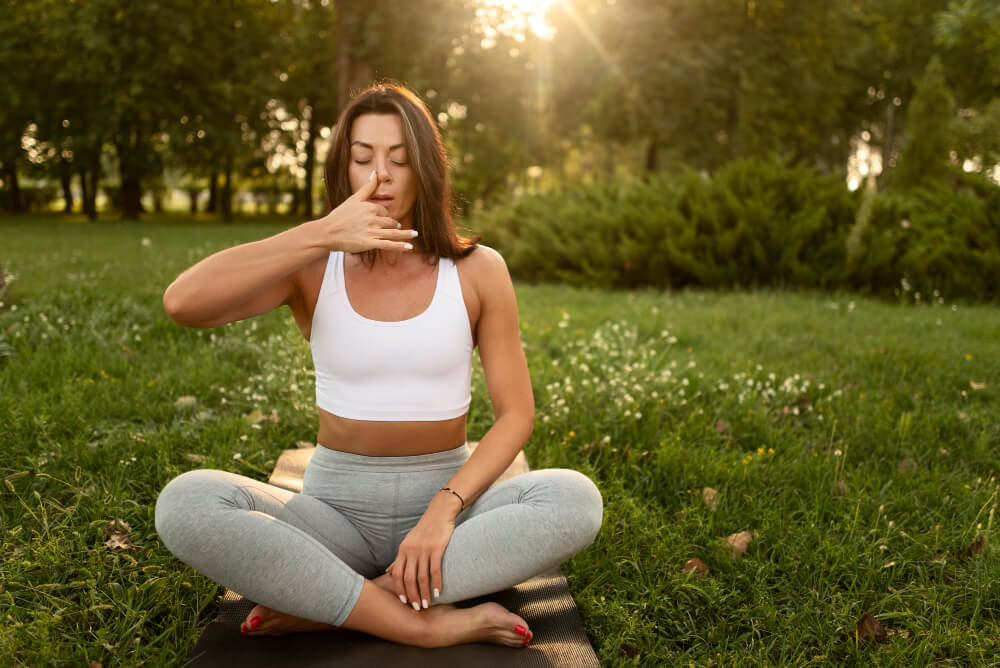
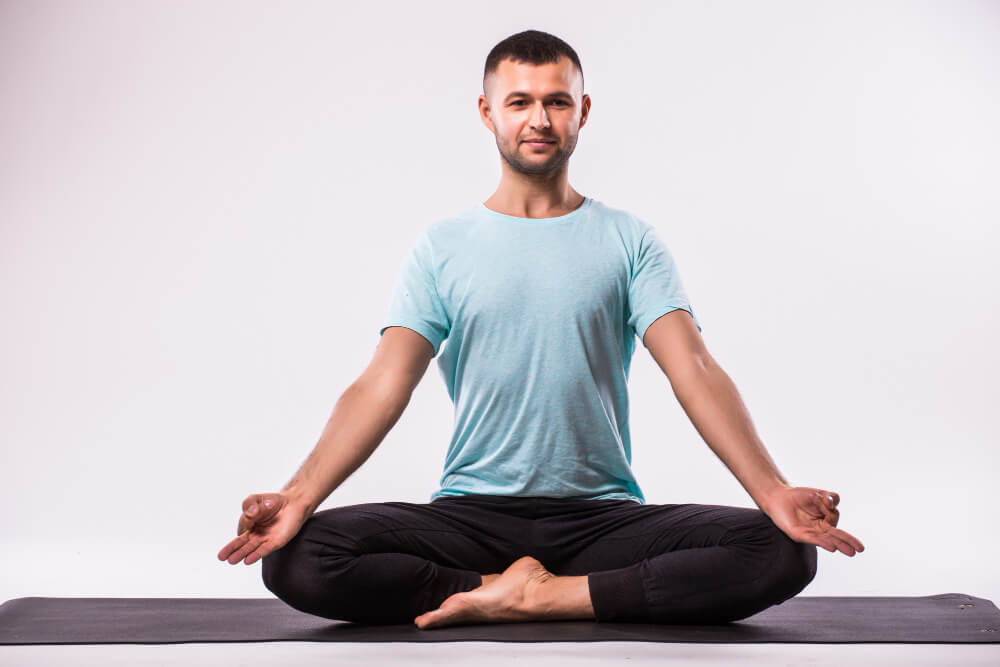
- Sit in a comfortable meditation posture — Sukhasana (Easy Pose), Siddhasana, Padmasana (Lotus Pose), or on a chair with feet flat on the floor.
- Spine tall and straight. Shoulders relaxed. Hands resting on knees in Gyan Mudra (index finger and thumb touching) or simply palms down.
- Begin with 3-5 rounds of normal breathing to settle into stillness.
The Complete Bahya Pranayama Technique
- Take a slow, deep inhale through both nostrils. Fill your lungs completely — belly first, then chest. Take your time. This inhale is the foundation of the practice.
- Exhale slowly and completely through both nostrils. Empty your lungs entirely — squeeze out every last bit of breath. The exhale should take longer than the inhale.
- When your lungs are fully empty — hold the breath outside. Do not inhale yet.
- With the breath held out, apply all three bandhas simultaneously: First Mula Bandha (contract the pelvic floor up), then Uddiyana Bandha (pull the abdomen deeply in and up), then Jalandhara Bandha (drop the chin toward the chest).
- Hold this position for as long as is comfortable. Beginners: 5-10 seconds. Intermediate: 15-30 seconds. Never hold to the point of strain or discomfort.
- To release: first release Jalandhara Bandha (lift the chin), then release Uddiyana Bandha (release the abdomen), then release Mula Bandha (relax the pelvic floor).
- Inhale slowly and gently. Do not gasp — the inhale should be controlled and smooth even after the retention.
- Breathe normally for 2-3 breaths to recover. This completes one full round of Bahya Pranayama.
- Repeat for 3-5 rounds as a beginner, building to 11-21 rounds over weeks of consistent practice.
| 💡 Most Common Beginner Mistake Rushing the release. When beginners feel the urge to breathe, they release the bandhas and gasp for air all at once — this creates a pressure jolt in the head and chest. Always release bandhas one by one in order (jalandhara first, then uddiyana, then mula) before allowing the inhale. The inhale should flow in gently, not be sucked in urgently. |
7 Proven Benefits of Bahya Pranayama
If Bahya Pranayama is done regularly, then health gets many benefits. You must also include this pranayama in your lifestyle. This will remove all the diseases related to your stomach, as well as Bahya Pranayama is also beneficial in calming the mind and mind(1).
1.Remove Stomach Diseases
Many diseases of the stomach take birth due to the improper functioning of the digestive system. In such a situation, you can do external pranayama to remove stomach diseases. By doing this daily, the problem of gas and acidity in the stomach is cured.
It also gives relief from constipation and indigestion. this Pranayama is also considered beneficial from ulcers. If you also have any disease related to the stomach, then definitely do this pranayama.
On the other hand, even if there is no disease, you can do it. With this, you will never have problems with stomach diseases in the future.
2.Increase Concentration
To increase your concentration, you must do this Pranayama regularly. It helps to keep the mind and mind calm, which increases concentration. You can do this pranayama to remove the restlessness of the mind.
If you do not feel like doing some work, then you should do it daily. This will gradually increase your concentration and you will feel like working.
3.Beneficial for Diabetics
This Pranayama is also very beneficial for diabetic or diabetic patients. In diabetes, the blood sugar level increases in the patient’s body, which causes him a lot of trouble. In such a situation, you can do it daily to keep it under control. You will get a lot of benefits from this.
4.Supply Blood
This Pranayama helps in supplying blood to different parts of the body. Due to this, blood circulation increases, due to which many types of diseases end themselves. You must do this pranayama to increase the blood flow in your body.
5.Increase Muscle Strength
To make the abdominal muscles strong and powerful, you must also do external pranayama. This makes the abdominal muscles very strong. In addition, it also increases the flexibility of the muscles. You must also include it in your lifestyle.
6.Strengthen Digestion
When the digestive system functions properly, we remain perfectly healthy. But even the slightest disturbance indigestion can make us sick. Therefore, it is very important to make it strong.
You can do Bahya Pranayama regularly to strengthen your digestive system or power. When the digestive system is strong, food gets digested well, due to which we get its complete nutrition.
7.Cure Urinary Tract Diseases
Urinary diseases can be cured by doing Bahya Pranayama regularly. With its daily practice, you can get rid of all the problems related to the urethra. If you have a bladder infection, it can also be removed. If you do this pranayama every day, then you will not have to deal with these problems.
8.Beneficial in Hernia Disease
Bahya Pranayama is very beneficial for hernia patients. If hernia patients do this pranayama regularly, then they can get a lot of benefit in it. If you do this daily, you will never have a hernia problem. But in this problem, you should always do this pranayama only on the advice of the doctor.
9. Make Body Fit
By doing Bahya Pranayama, complete fatigue of the body is removed. This makes the body very agile. Along with physical fatigue, it is also beneficial in removing mental fatigue. If you feel tired soon after doing any work, then start doing this pranayama regularly.
Important note from TheShivYoga.com: Bahya Pranayama is a powerful complementary practice that supports health — it is not a replacement for medical treatment. If you have any diagnosed medical condition, always work with your doctor alongside your yoga practice.
⚠️ Who Should Avoid Bahya Pranayama Do NOT practice Bahya Pranayama if you have: high blood pressure (hypertension) — the breath retention increases intracranial pressure, heart disease or recent cardiac surgery, glaucoma or other eye pressure conditions, pregnancy — the abdominal locks can harm the baby, recent abdominal surgery (wait at least 6 months), severe respiratory conditions like asthma during an active episode, or if you are menstruating (traditional yoga recommends avoiding intensive bandha practice during menstruation). If in doubt — consult your doctor before starting. Beginners should always start with very short retentions (5 seconds) and build gradually.
Bahya Pranayama vs Other Pranayama Techniques
Understanding how Bahya Pranayama fits into the broader pranayama family helps you use it correctly in your practice:
| Pranayama | Breath Action | Primary Benefit | Difficulty |
| Bahya Pranayama | Exhale → Hold OUT | Core strength + digestion + external retention | Intermediate |
| Anulom Vilom | Alternate nostril breathing | Balance + clarity + stress relief | Beginner |
| Bhramari Pranayama | Exhale with humming | Immediate calm + anxiety relief | Beginner |
| Kapalbhati | Rapid forceful exhales | Cleansing + energy + weight loss | Beginner+ |
| Bhastrika | Rapid deep inhale + exhale | Energy + lung capacity | Intermediate |
| Kumbhaka (Antara) | Inhale → Hold IN | Prana retention + concentration | Intermediate |
The ideal daily pranayama sequence at TheShivYoga.com recommendation: start with Anulom Vilom (5-10 minutes) to balance the system, then Bhramari (5 minutes) to calm, then Kapalbhati (5 minutes) to cleanse, and finish with Bahya Pranayama (3-5 minutes) as the deeper practice. This sequence takes about 20 minutes and produces comprehensive benefits
How to Build a Daily Bahya Pranayama Practice
Week 1-2: Learning the Foundation
- 3 rounds per session, retention 5 seconds only
- Focus entirely on learning Uddiyana Bandha correctly — this is the most important element
- Practice Mula Bandha separately throughout the day while sitting
- Best time: Early morning on empty stomach
Week 3-4: Adding Duration
- 5 rounds per session, retention 10-15 seconds
- All three bandhas now applied together
- Notice how your abdomen is changing — more toned, less bloated
- Track digestive improvements in a journal
Month 2 Onwards: Established Practice
- 11 rounds per session, retention 20-30 seconds
- Add to your full morning pranayama sequence
- Combine with Kapalbhati for maximum digestive benefit
- Practice 5-6 days per week — rest one day
| 💡 Best Practice Time Brahma Muhurta — approximately 4:30-6:00 AM — is the traditional recommendation for all pranayama. But practically speaking, any consistent morning time on an empty stomach works. Evening practice is possible but less effective since digestion interferes. Whatever time you can practice consistently is better than the ‘perfect’ time you never actually keep. |
What Does Bahya Pranayama Feel Like? Honest Practitioner Experience
Most yoga guides describe techniques without telling you what it actually feels like to practice them. Here is an honest description of what to expect at each stage:
Your First Session
Awkward. The coordination of three bandhas while holding your breath feels like trying to rub your stomach and pat your head simultaneously. Uddiyana Bandha in particular surprises most beginners — the degree of abdominal hollowing required is more than expected. You will probably manage 1-2 rounds before needing a long rest. This is completely normal.
After 2 Weeks
The coordination begins to feel natural. Uddiyana Bandha deepens noticeably as your abdominal muscles learn the movement. Most practitioners report improved digestion and reduced bloating within the first two weeks — often the most immediate and motivating benefit. The retention begins to feel meditative rather than stressful.
After 1-2 Months
Bahya Pranayama becomes a practice you look forward to. The deep abdominal work creates a physical sensation of energy and lightness after each session. Retentions lengthen naturally. Many practitioners report significantly improved core strength, reduced lower back pain, and a general sense of greater physical vitality. The parasympathetic activation from the extended exhalation and retention creates a calm focus that carries into the rest of the day.
Expert Tips to Deepen Your Bahya Pranayama Practice
- Never force the retention — if you feel dizziness, nausea, or any head pressure, release immediately and breathe normally. These are signs you held too long.
- Film yourself doing Uddiyana Bandha — seeing how deeply the abdomen can hollow is both instructive and motivating. Most beginners are not going as deep as they could.
- Practice Uddiyana Bandha standing first — it is easier to learn with gravity assisting the abdominal draw. Stand, exhale fully, bend forward slightly, and draw the abdomen in and up. Once you have the sensation, bring it to seated practice.
- Count your retention mentally rather than watching a clock — this keeps your awareness internal where it belongs during pranayama.
- Warm up with 10 rounds of Kapalbhati before Bahya Pranayama — Kapalbhati clears the respiratory tract and loosens the abdominal muscles, making the bandhas significantly more accessible.
Keep a practice log — note how many rounds, retention duration, and how you feel afterward. Progress in pranayama is gradual and a log makes it visible.
Conclusion
Bahya Pranayama asks more of you than most breathing practices — it requires coordination, patience, and a willingness to sit with discomfort while your lungs are empty and your body is engaged. That demand is precisely why it delivers results that gentler practices simply cannot match.
The triple bandha combination — Mula, Uddiyana, and Jalandhara — creates a full-body internal massage that no amount of external exercise replicates. The digestive benefits arrive within days for most practitioners. The core strengthening builds over weeks. The meditative depth comes with months of consistent practice.
Start with three rounds tomorrow morning before breakfast. Focus entirely on Uddiyana Bandha — draw that abdomen in as deeply as you can. Notice what you feel afterward. Then come back the next morning and do it again.
That consistency — simple, daily, unglamorous — is what transforms pranayama from an interesting technique into a genuine practice. And Bahya Pranayama, practiced consistently, has the potential to transform your digestive health, your core strength, and your relationship with your breath in ways that will surprise you.
Frequently Asked Questions About Bahya Pranayama
Q: What is Bahya Pranayama and how is it different from other pranayama?
A: Bahya Pranayama is a yogic breathing technique where you exhale completely and hold your breath outside the body — called external retention or Bahya Kumbhaka. Three energy locks (bandhas) are applied during the retention. This makes it fundamentally different from most pranayama techniques, which focus on the inhale or on alternate nostril breathing. The external retention combined with triple bandha creates a uniquely powerful effect on the abdominal organs, pelvic floor, and nervous system that other pranayama techniques do not replicate.
Q: How many times should I do Bahya Pranayama daily?
A: Beginners should start with 3 rounds per session and build gradually. After 2-4 weeks, increase to 5 rounds. Experienced practitioners typically practice 11-21 rounds per session. The traditional recommendation is daily morning practice, but 5-6 days per week with one rest day is also effective. Quality matters more than quantity — 5 rounds with correct bandha engagement outperforms 21 rounds done carelessly.
Q: Can Bahya Pranayama cure hernia?
A: Bahya Pranayama is one of the most commonly recommended yoga practices for hernia management and prevention, but ‘cure’ is too strong a word. The repeated Uddiyana Bandha strengthens the abdominal wall and reduces strain on the herniated area, and many practitioners report significant improvement in symptoms with consistent practice. However, for diagnosed hernia — especially inguinal hernia — always consult your doctor before beginning Bahya Pranayama, as some cases require medical treatment rather than yoga alone.
Q: Can I do Bahya Pranayama if I have diabetes?
A: Yes — Bahya Pranayama is considered one of the most beneficial pranayama practices for people with Type 2 diabetes. The deep abdominal massage during Uddiyana Bandha stimulates the pancreas and improves abdominal circulation. Combined with Kapalbhati and Anulom Vilom, daily pranayama practice has been shown in research studies to support blood sugar regulation. Always practice alongside — not instead of — your prescribed medical treatment, and monitor your blood sugar to understand how practice affects you individually.
Q: Is Bahya Pranayama safe for beginners?
A: Bahya Pranayama is intermediate-level pranayama — not ideal as the very first breathing practice for a complete beginner. At TheShivYoga.com, we recommend starting with Anulom Vilom and Bhramari Pranayama for 2-4 weeks before introducing Bahya Pranayama. Once you are comfortable with those practices and have built basic breath awareness, Bahya Pranayama becomes accessible — start with very short retentions (5 seconds) and build slowly.
Q: What is Uddiyana Bandha and why is it important in Bahya Pranayama?
A: Uddiyana Bandha is the abdominal lock — drawing the entire abdomen deeply inward and upward toward the spine and ribcage after a complete exhalation. It is the most powerful of the three bandhas applied in Bahya Pranayama and the primary source of its digestive and core-strengthening benefits. The word ‘Uddiyana’ means ‘to fly up’ in Sanskrit — describing the dramatic upward movement of the abdominal organs when the lock is fully applied. Without a proper Uddiyana Bandha, Bahya Pranayama loses most of its therapeutic benefit.
Q: Can Bahya Pranayama be done at night?
A: Technically yes, but morning practice is significantly more effective for most of Bahya Pranayama’s benefits. The practice should always be done on an empty stomach — which means at least 4-5 hours after the last meal. Evening practice is possible if your dinner was early enough, but the traditional recommendation and the experience of most practitioners strongly favors early morning on a completely empty stomach. Night practice before bed is not recommended — the energising effect of the bandhas can interfere with sleep.