


✨ Quick Answer
Yoga for reducing belly fat works through consistent core strengthening, deep breathing, and whole-body movement, not spot reduction. Poses such as Navasana (Boat Pose), Bhujangasana (Cobra Pose), and Setu Bandha Sarvangasana (Bridge Pose) engage the abdominal muscles, while Kapalabhati and gentle supine twists support digestion and stress control. Practicing 20 to 30 minutes, four to five days a week, combined with a balanced diet, supports a smaller waistline.
Many people start yoga with one goal in mind: a flatter stomach. They look up a few abdominal poses, hold a plank for a minute, and wonder why the belly has not changed after a month.
The problem is rarely effort alone. Belly fat responds to overall fat loss, muscle tone around the core, daily movement, sleep, and stress levels. Yoga addresses several of these factors at once. It strengthens the deep abdominal muscles, improves posture so the midsection looks more toned, and calms the stress response that often drives fat storage around the waist.
This guide explains which yoga poses for belly fat work best, how to build a 20-minute routine, and which breathing techniques support the process. It also corrects common myths, such as the idea that yoga can melt fat from one area on command. You will also find modifications for different bodies, safety guidance, and a ready-to-practice sequence.
If you want a complete plan you can start this week, follow the step-by-step routine below and practice it at least four days a week.
What Is Belly Fat and Why Does It Matter?
Belly fat is stored in two main places. Subcutaneous fat sits just under the skin and is the soft layer you can pinch. Visceral fat sits deeper, around the liver, intestines, and other organs. Visceral fat is more closely linked to heart disease, type 2 diabetes, and metabolic problems.
Waist size is a simple way to check the risk level. According to the National Heart, Lung, and Blood Institute (NHLBI), a waist measurement above 35 inches (88 cm) in women or above 40 inches (102 cm) in men raises the risk of these conditions. Measure around the bare waist, just above the hip bones, after a normal breath out.
Beginner Tip: Measure your waist once a month, at the same time of day, using a soft tape. The number tells you more about progress than the scale does.
Why Belly Fat Builds Up
Several everyday factors contribute to belly fat, including sitting for long hours, poor sleep, high stress, and eating more calories than the body uses. Hormonal changes, especially around menopause, can also shift fat toward the midsection. Yoga does not change every one of these factors, but it helps with several of them.
Can Yoga Reduce Belly Fat?
Yes, regular yoga practice can reduce belly fat and waist size over time, especially when it is combined with a calorie-conscious diet and daily movement. Yoga cannot target fat loss to only the stomach.
Research supports a modest but meaningful effect. A review by Tyagi and Cohen, published in the International Journal of Yoga in 2016, examined yoga and obesity and reported that regular practice was associated with improvements in body weight, BMI, and waist measurements in several studies. Most of these studies used yoga several times a week for at least several weeks.
Myth: Yoga Melts Belly Fat in Seven Days
This claim appears in many online articles, but it is not supported by evidence. Fat loss happens across the whole body, and most people see waist changes over several weeks to months. A realistic goal is a gradual reduction in waist size over 8 to 12 weeks of consistent practice.
Myth: Crunches Are the Only Way to Lose Belly Fat
Abdominal exercises build muscle under the fat, but they do not burn the fat sitting on top of it. This is called the spot reduction myth. Yoga works differently. Its full-body poses, breath control, and moderate intensity help create a calorie balance, build lean tissue, and improve posture, which together make the midsection look firmer.
Best Yoga Poses for Reducing Belly
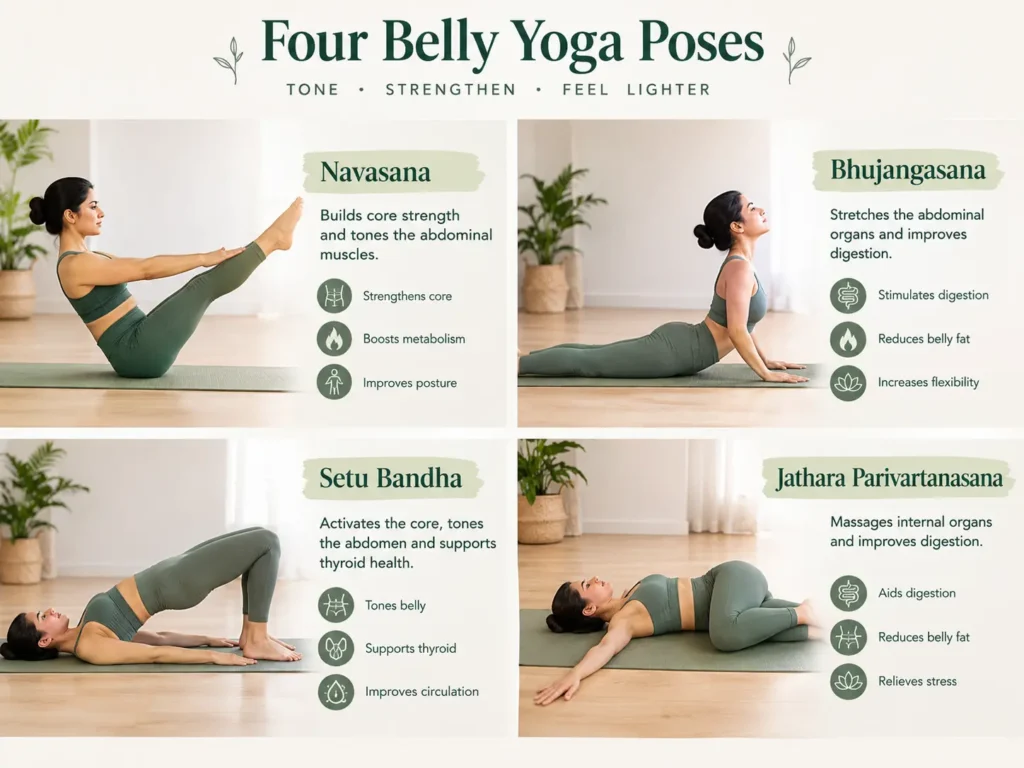
The most effective yoga poses for belly fat combine core engagement with standing, balancing, or backbending movements that raise heart rate gently. The poses below are listed from beginner-friendly to more advanced.
Navasana (Boat Pose)
Navasana directly challenges the rectus abdominis and the deep core muscles. It is one of the most useful poses for building abdominal strength. Sit on the mat, lean back slightly, lift your feet, and balance on your sit bones with the legs extended or bent. Keep the spine long and breathe steadily.
Ardha Navasana (Half Boat Pose)
This is an easier version of Navasana. Keep the knees bent and the shins parallel to the floor. It is a good first step for beginners and for people with lower back sensitivity.
Bhujangasana (Cobra Pose)
Bhujangasana strengthens the lower abdominal wall and the spine while opening the chest. It supports better posture, which helps the stomach look flatter. Lie face down, place the palms under the shoulders, and lift the chest using the back muscles rather than pushing hard with the arms.
Setu Bandha Sarvangasana (Bridge Pose)
Bridge Pose activates the glutes, lower back, and lower abdomen. It also gently inverts the body, which many practitioners find calming. Lie on your back, bend the knees, and lift the hips while keeping the thighs parallel.
Jathara Parivartanasana (Revolved Abdomen Pose)
This supine twist massages the internal organs and helps release tension in the waist. Lie on your back, bring the knees to the chest, and let them fall to one side while keeping both shoulders on the floor. Many people use this pose to reduce bloating after meals.
Kapalabhati (Skull Shining Breath)
Kapalabhati is a breathing technique rather than a physical pose. It uses short, forceful exhalations drawn by the lower abdomen. Regular practice trains the core to contract and can support a sense of lightness in the belly. Practice it sitting in a comfortable posture, with a relaxed face and shoulders.
Balasana (Child’s Pose)
Child’s pose is a restorative rest between active poses. It relieves tension in the hips and lower back and helps the nervous system settle. A calmer nervous system supports better digestion and reduces stress-related eating for many people.
Step-by-Step Guide: 20-Minute Belly-Focused Yoga Routine
This routine can be practiced at home with a mat, a folded blanket, and a timer. Move slowly, breathe continuously, and stop any movement that causes sharp pain.
Step 1: Warm up with Marjaryasana-Bitilasana (Cat-Cow Pose), 1 minute Start on hands and knees. Inhale as you drop the belly and lift the chest. Exhale as you round the spine and tuck the chin. This warms the spine and wakes up the core.
Step 2: Practice Setu Bandha Sarvangasana (Bridge Pose), 3 rounds of 30 seconds Lie on your back, bend the knees, and lift the hips. Hold for 30 seconds, lower slowly, and rest for 10 seconds between rounds.
Step 3: Practice Bhujangasana (Cobra Pose), 3 rounds of 3 breaths Lie on your belly and lift the chest to a comfortable height. Keep the elbows bent and close to the body. Lower slowly after each round.
Step 4: Practice Ardha Navasana (Half Boat Pose), 3 rounds of 5 breaths Sit with the knees bent and the shins parallel to the floor. Hold the back of the thighs and lean back slightly. Keep the spine long.
Step 5: Practice Navasana (Boat Pose), 3 rounds of 20 seconds Straighten the legs if you can. Keep the chest open and the breath steady. Lower the legs if the lower back starts to round.
Step 6: Practice Jathara Parivartanasana (Revolved Abdomen Pose), 1 minute on each side Lie on your back and let the knees fall to one side. Keep both shoulders on the floor and breathe into the belly. Repeat on the other side.
Step 7: Practice Kapalabhati (Skull Shining Breath), 2 rounds of 30 breaths Sit tall and take a deep breath in. Exhale forcefully through the nose by pulling the navel in, then let the inhale happen naturally. Rest for 30 seconds between rounds. Stop if you feel dizzy.
Step 8: Finish with Balasana (Child’s Pose) and Shavasana (Corpse Pose), 3 to 5 minutes Rest in child’s pose for 1 to 2 minutes, then lie flat in Shavasana. Let the body fully relax and notice the breath slowing.
Total time: About 20 minutes including transitions. Practice this routine four to five days a week for the best results.
Breathing Techniques That Support Belly Fat Reduction
Breath is a core part of yoga for belly fat because it trains the deep abdominal muscles and lowers stress. Two techniques stand out.
Diaphragmatic Breathing
Lie on your back with one hand on the belly. Inhale slowly so the belly rises, then exhale so the belly falls. Practice for 5 minutes a day. This builds awareness of the breath and helps you engage the core without strain.
Kapalabhati and Bhastrika
Kapalabhati uses passive inhales and active exhales. Bhastrika, also called Bellows Breath, uses equal active inhales and exhales. Bhastrika is more intense and should be practiced only after you have mastered Kapalabhati, and only if you have no heart or blood pressure concerns.
Pro Tip: Breathe through the nose during all core work. Mouth breathing increases tension in the neck and shoulders.
Modifications for Different Bodies
Every body is different, so each pose can be adjusted to suit your needs. Use these variations to practice safely.
Beginners: Replace Navasana with Ardha Navasana, and reduce hold times to 10 seconds. Add more rest between rounds.
Wrist pain: In Bhujangasana, rest on the forearms instead of the palms. In Marjaryasana-Bitilasana, make a loose fist or use the forearms.
Lower back sensitivity: Keep the knees bent in all boat variations. Place a folded blanket under the hips in Setu Bandha. Skip Navasana if sharp pain appears.
Neck sensitivity: In Bhujangasana, keep the gaze forward rather than lifting the head back. In Jathara Parivartanasana, place a folded blanket under the head.
Tight hips: Place a bolster or cushion under the hips in Balasana. Keep the knees wide apart to open the inner thighs.
Post-surgery or healing abdomen: Skip all boat and cobra variations until your doctor or physiotherapist clears you. Focus on breathing and gentle supine movement.
Pregnancy: Avoid deep abdominal work, Kapalabhati, and any lying flat on the back after the first trimester. Ask your doctor before starting any new routine, and work with a prenatal yoga teacher.
Diastasis recti (abdominal separation): Avoid crunch-style movements and forceful breathing. Focus on gentle breathing, pelvic floor awareness, and supported poses until a qualified professional advises you.
Common Mistakes (and How to Fix Them)
Mistake 1: Holding the breath during holds. Correction: Breathe continuously. Holding the breath creates tension in the abdomen, which works against the goal of a softer core.
Mistake 2: Relying only on crunches and sit-ups. Correction: Combine core work with full-body poses, walking, and strength training. Yoga builds balance and posture as well as core strength.
Mistake 3: Expecting spot reduction. Correction: Focus on overall fat loss through calorie balance, daily movement, and consistent practice. Track waist size instead of only body weight.
Mistake 4: Training the abs every day without rest. Correction: Practice the core routine four to five days a week. Recovery days allow the muscles to adapt and grow stronger.
Mistake 5: Ignoring sleep and stress. Correction: Aim for 7 to 9 hours of sleep and end each practice with Shavasana. Poor sleep increases hunger hormones, and chronic stress can make it harder to lose weight around the waist.
When to Practice
The best time depends on your schedule, but a few guidelines help.
Morning practice: Many people find a morning routine easiest to keep. Practice on an empty stomach or after a light snack. This suits the Cat-Cow, Bridge, and breathing steps.
Evening practice: A gentle evening session can help you wind down. Skip Kapalabhati and Bhastrika in the evening, since they can make it harder to fall asleep.
After meals: Wait at least 2 to 3 hours after a heavy meal before practicing boat or twisting poses. Practicing on a full stomach can cause discomfort.
Desk breaks: Even 5 minutes of Cat-Cow, Cobra, and Child’s Pose during a workday helps reduce stiffness and keeps the core active.
Contraindications: When to Modify or Avoid
Yoga is safe for most adults, but some situations call for caution or medical advice first.
- Pregnancy: Consult your doctor before starting. Avoid lying flat on the back after the first trimester, and skip deep abdominal work.
- Recent abdominal surgery or hernia: Do not practice boat, cobra, or forceful breathing until a doctor clears you.
- High blood pressure: Avoid breath retention and inverted poses. Kapalabhati and Bhastrika should be skipped unless your doctor approves.
- Heart conditions: Avoid forceful breathing. Check with a cardiologist before practicing vigorous core work.
- Diastasis recti: Use gentle variations and seek guidance from a physiotherapist.
- Digestive flare-ups: During an active flare of conditions such as IBS or acid reflux, skip twists and deep forward folds and focus on gentle breathing.
Important: This guide does not replace medical advice. If you experience chest pain, dizziness, or sharp abdominal pain during practice, stop immediately and seek medical help.
FAQ Section
Q1. Can yoga reduce belly fat without dieting?
Yoga can reduce waist size and improve core strength on its own, but results are usually larger when practice is combined with a balanced diet. Yoga supports calorie balance, stress control, and better sleep, which all affect belly fat.
Q2. Which yoga poses are best for belly fat?
Navasana (Boat Pose), Ardha Navasana (Half Boat Pose), Bhujangasana (Cobra Pose), Setu Bandha Sarvangasana (Bridge Pose), and Jathara Parivartanasana (Revolved Abdomen Pose) are the most effective. Add Kapalabhati for breath-based core work.
Q3. How long does it take to see results from yoga for belly fat?
Most people notice changes in posture and energy within 2 to 4 weeks. Measurable waist reduction often appears after 8 to 12 weeks of consistent practice four to five days a week.
Q4. Can I do yoga for belly fat every day?
Gentle practice every day is fine, but intense core work should be spaced out. Take at least one or two recovery days per week, and listen to your body if you feel unusually tired or sore.
Q5. Is yoga safe if I have a health condition?
Many people with conditions can practice safely with modifications, but some need medical clearance first. Talk to your doctor before starting if you are pregnant, have recent surgery, high blood pressure, or heart problems.
Key Takeaways
- Yoga cannot reduce belly fat in one spot, but regular practice can reduce overall fat and waist size.
- Waist measurement above 35 inches (88 cm) for women or 40 inches (102 cm) for men raises health risk, according to NHLBI.
- Navasana, Ardha Navasana, Bhujangasana, and Setu Bandha are the core poses for belly-focused practice.
- Jathara Parivartanasana can support digestion and reduce bloating for many people.
- Kapalabhati trains the core through breath, but it should be avoided in pregnancy and by people with high blood pressure or heart conditions.
- A 20-minute routine practiced four to five days a week is enough for most beginners.
- Expect gradual changes over 8 to 12 weeks, not seven days.
- Breathe continuously during every hold to avoid abdominal tension.
- Combine yoga with a balanced diet, daily walking, and 7 to 9 hours of sleep for best results.
- Track waist size monthly as a more useful measure than body weight alone.
- Modify every pose to fit your body, and get medical clearance if you have a health condition.
Conclusion
Yoga for reducing belly fat works best when you treat it as a long-term practice rather than a quick fix. Belly fat responds to overall fat loss, a stronger core, better posture, lower stress, and steady daily movement. Yoga supports all of these at the same time, which is why it is a practical choice for beginners and experienced practitioners alike.
The routine in this guide is a simple place to start. Warm up with Cat-Cow, lift the hips in Bridge Pose, strengthen the core with Cobra, Half Boat, and Boat, twist gently with Revolved Abdomen Pose, and finish with Kapalabhati and rest. Practice it four to five days a week, breathe continuously, and modify any pose that does not feel right in your body.
Measure your waist once a month, notice how you sleep and feel, and be patient with the process. Most people see real changes within 8 to 12 weeks of consistent practice. If you have a health condition, pregnancy, or recent surgery, speak with your doctor before you begin.
Ready to take the first step? Practice the routine today, then explore more beginner guides on TheShivYoga.com to build a complete daily practice that supports your body, mind, and soul.

