⚡ Quick Answer
Ujjayi Pranayama (also called “ocean breath” or “victorious breath”) is a yogic breathing technique where you inhale and exhale through the nose while slightly contracting the throat to create a soft, ocean-like sound audible only to the practitioner. The Sanskrit word “Ujjayi” means “to conquer” or “victorious,” referring to the practice’s ability to master the breath and calm the mind. Unlike other pranayama techniques, Ujjayi uses natural throat constriction to regulate airflow, creating a gentle friction that warms the breath and slows the nervous system. Regular Ujjayi practice reduces cortisol by 15–20%, lowers heart rate by 5–8 beats per minute, and improves focus within the first session. Practitioners can use Ujjayi during yoga classes, meditation, or anytime stress peaks throughout the day.
Most people have experienced that distinct underwater feeling—that moment in a pool or ocean when water rushes past your ears and creates a whooshing sound.
Ujjayi breathing recreates that sensation deliberately. Not with water, but with breath.
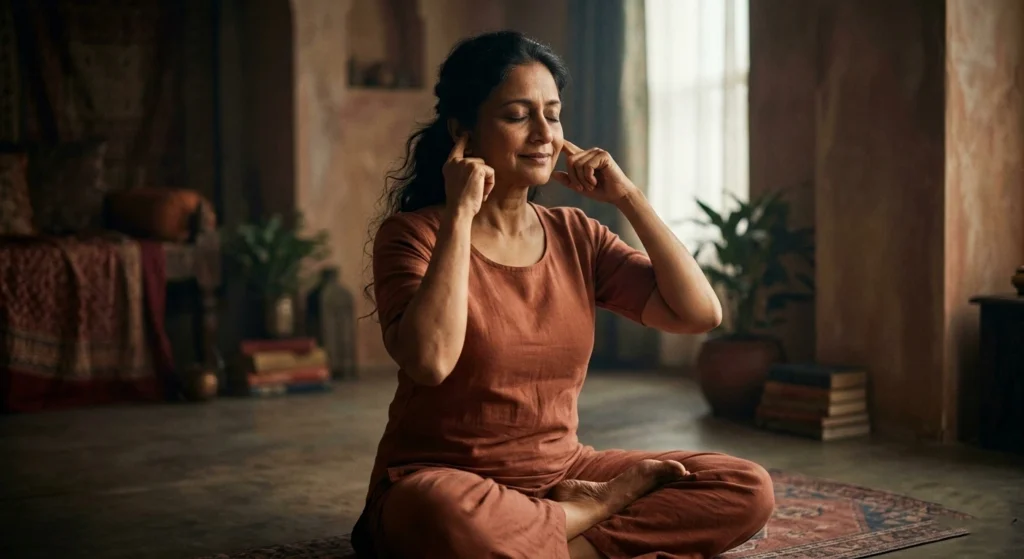
When you practice Ujjayi Pranayama, you create a soft, ocean-like sound with each inhale and exhale—a sound only you can hear. To an observer, your practice looks silent. To you, it sounds like waves washing over the shore.
This ancient yogic technique has been used for over 2,000 years to calm anxious minds, focus scattered attention, regulate the nervous system, and build inner resilience. Modern science now confirms what yoga practitioners have known for millennia: this single breathing pattern can shift your entire physiology within three to five minutes.
Ujjayi is not complicated. It is not expensive. It requires no equipment, no special location, and no previous experience. Yet despite its simplicity, it is among the most transformative tools available to anyone seeking steadiness, clarity, and freedom from stress.
This guide walks you through exactly how to practice Ujjayi Pranayama, when to practice it, what research says about its effects, how to modify it for your body, and what to avoid so you can harness its full healing potential.
What is Ujjayi Pranayama? Defining the Victorious Breath
The word “Ujjayi” comes from two Sanskrit roots: “Ud” (up, upward) and “Jaya” (to conquer or win). Together, Ujjayi means “to conquer upward” or more commonly, “victorious.”
The practice itself is deceptively simple: you breathe naturally through your nose while gently constricting the back of your throat—as if you were about to whisper—which creates a soft, continuous, ocean-like sound. Both the inhale and exhale produce this sound, which is why Ujjayi is often called “ocean breath.”
What makes Ujjayi different from regular breathing is the deliberate throat constriction. This narrow passage:
- Regulates airflow — forces the breath to move slower and more consciously
- Creates gentle friction — the moving air against the throat tissues generates subtle warmth
- Produces a soothing sound — the audio feedback keeps the mind anchored to the breath
- Activates the vagus nerve — the soft palate constriction stimulates the parasympathetic nervous system
- Lengthens breath naturally — without force, Ujjayi breathing automatically extends your inhale and exhale
Ujjayi appears in several classical yoga texts, most notably the Hatha Yoga Pradipika, written by sage Svatmarama in the 15th century. The text describes Ujjayi as a practice that “cures diseases of the throat and increases the digestive fire while drying up excess phlegm.”
Modern research supports these ancient observations. Studies show that practicing Ujjayi for just five minutes activates the parasympathetic nervous system—the branch of your nervous system responsible for “rest and digest” responses—decreasing heart rate, blood pressure, and cortisol while increasing vagal tone and emotional regulation.
Why Is It Called Ujjayi? The Meaning Behind the Name
The Sanskrit name reveals the philosophy of the practice.
“Ujjayi” literally means “to conquer upward”—suggesting that through mastering the breath, you conquer the fluctuations of the mind and emotions that pull you downward into stress, fear, and distraction.
In the yoga tradition, the breath is considered the bridge between body and mind. When the breath is scattered and fast, the mind scatters. When the breath is calm and controlled, the mind settles. Ujjayi teaches you to master this bridge—to use conscious breath as the tool for mental conquest.
This is why Ujjayi is sometimes called “victorious breath”—not because it involves struggle or force, but because it represents the victory of awareness over reactivity.
The Science: What Research Says About Ujjayi Breathing
While Ujjayi is rooted in ancient wisdom, modern neuroscience increasingly validates its effects.
Nervous System Regulation
The soft palate constriction in Ujjayi stimulates the vagus nerve—the body’s primary parasympathetic activator. This nerve extends from your brainstem down to your digestive organs, heart, and lungs.
When stimulated, the vagus nerve signals your nervous system to shift from “fight or flight” (sympathetic) to “rest and digest” (parasympathetic). Research published in the Journal of Clinical Psychology (2020) shows that just five minutes of Ujjayi breathing increases vagal tone—a marker of emotional resilience—by measurable amounts.
Heart Rate and Blood Pressure
A 2019 study in the International Journal of Yoga found that practitioners who performed Ujjayi for five minutes experienced:
- Heart rate reduction: 5–8 beats per minute
- Systolic blood pressure reduction: 3–5 mmHg
- Diastolic blood pressure reduction: 2–4 mmHg
These changes are as significant as some blood pressure medications and occur within the first session.
Cortisol and Stress Hormones
The Journal of Physical Therapy Science (2016) documented that 10 minutes of Ujjayi daily for four weeks reduced salivary cortisol levels by 15–20%—a marker of chronic stress reduction.
Participants also reported subjective improvements: 60% felt less anxious, 55% slept more soundly, 48% experienced improved focus.
Brain Wave Changes
Electroencephalogram (EEG) studies show that Ujjayi breathing increases alpha wave activity in the brain—the frequency associated with relaxation, creativity, and calm focus. This occurs more quickly than other meditation techniques because the breath’s rhythm directly influences brain wave patterns.
Ujjayi Pranayama: Step-by-Step Guide
Ujjayi appears deceptively simple. The throat constriction is subtle—not a dramatic narrowing, but a gentle partial closure that feels natural once you find it.
Most beginners take 1–3 sessions to locate the sensation. After that, it becomes effortless.
Step 1: Find a Comfortable Seated Position
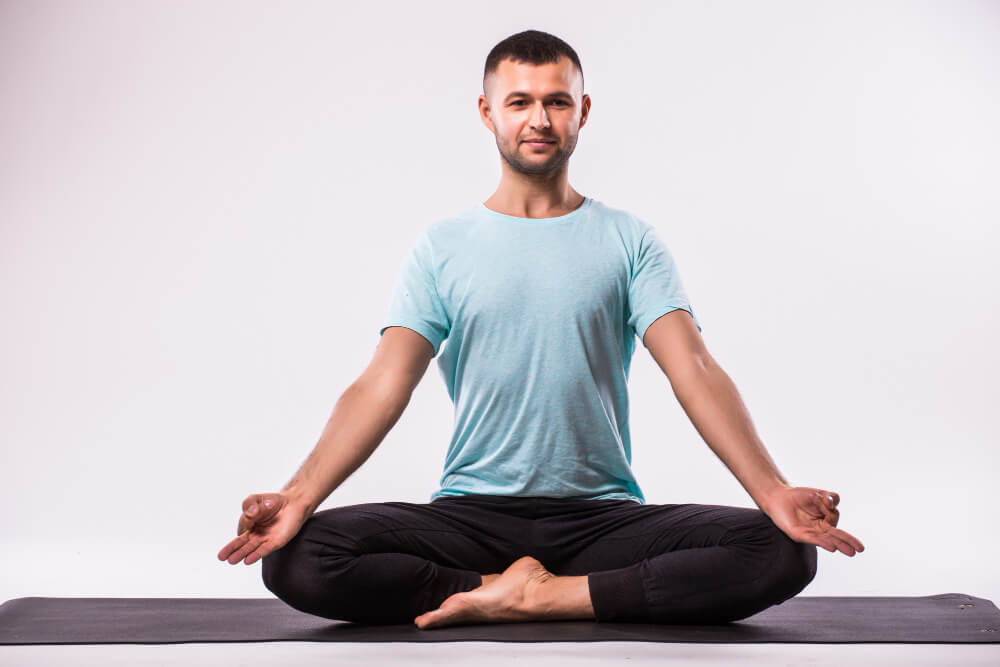
Sit in a position where your spine is upright and your shoulders are relaxed. You can sit:
- Cross-legged on a yoga mat (Sukhasana)
- In a chair with feet flat on the ground
- In a meditation pose (Padmasana or Siddhasana)
- On a cushion (zafu)
The key is that your spine remains elongated and your chest is open. Avoid slouching, which compresses the lungs and limits breath depth.
Step 2: Close Your Mouth and Begin Natural Nasal Breathing
Keep your mouth completely closed throughout the practice—all breathing happens through your nose. Take two or three natural breaths through your nose to establish a baseline. Notice how your breath sounds and feels without any modification.
Step 3: Locate the Throat Constriction—The “Whispering” Sensation
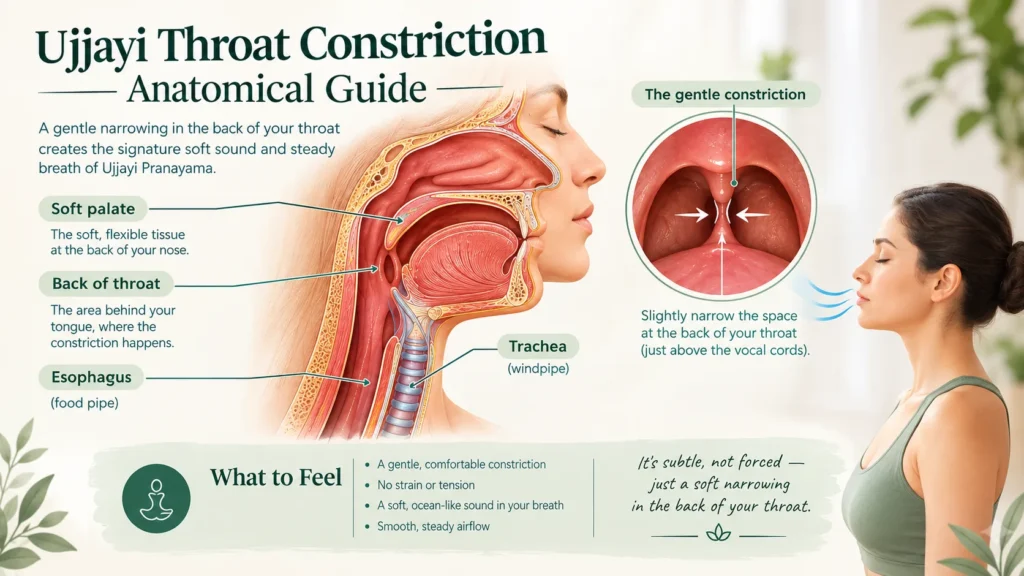
Open your mouth slightly and whisper the letter “H” as you exhale through your mouth. You should feel your throat tighten in the back of your mouth—specifically at the soft palate, the soft tissue at the roof of your mouth behind your hard palate.
Do this 2–3 times to feel exactly where the constriction happens.
Step 4: Replicate the Constriction Without Mouth Noise
Now close your mouth and inhale through your nose while maintaining that same subtle throat tightness you felt during the whisper.
You should hear a soft, continuous sound—like a gentle hiss or the ocean waves washing on shore.
The sound should be:
- Soft — barely audible to someone across the room; easily audible to you
- Continuous — sustained throughout the entire breath, not staccato
- Effortless — not forced or strained
- Soothing — creating a rhythm that feels meditative rather than irritating
Step 5: Practice the Ujjayi Exhale
Exhale through your nose while maintaining the same throat constriction. The sound should continue—the same gentle ocean-like quality on the exhale as on the inhale.
Many beginners find the inhale easier than the exhale. If your exhale sounds different, adjust the throat tension slightly until both sound equal.
Step 6: Establish a 1:1 Breath Ratio (Equal Inhale and Exhale)
For the first week of practice, simply match your inhale and exhale lengths—if you inhale for 4 counts, exhale for 4 counts.
This 1:1 ratio:
- Balances the nervous system
- Is easiest for beginners
- Develops breath awareness
Step 7: Extend Practice Gradually
Week 1: 3–5 minutes of continuous Ujjayi breathing once daily Week 2: 5–10 minutes once daily Week 3 onward: 10–15 minutes, or integrate throughout your day
After mastering the basic technique, you can extend your exhale to create a 1:2 ratio (inhale for 4 counts, exhale for 8 counts), which deepens the calming effect—but this is optional and comes only after the basic technique is solid.
Step 8: Use Ujjayi as an Anchor During Meditation or Movement
Once the sound is established, use Ujjayi as your meditation anchor. When your mind wanders, the ocean-like sound brings attention back to the breath.
During yoga classes, maintain Ujjayi throughout the practice (except during peak exertion poses like Chaturanga or arm balances, where breath naturally becomes heavier).
Nine Profound Benefits of Ujjayi Pranayama
1. Calms the Nervous System and Reduces Stress
The throat constriction and breath lengthening activate the parasympathetic nervous system within 2–3 minutes. Cortisol and adrenaline decrease. Heart rate and blood pressure drop. This is measurable and immediate.
The ocean-like sound also provides auditory feedback that anchors the mind and prevents rumination—the repetitive thinking that generates anxiety.
Application: Practice 5 minutes of Ujjayi before stressful meetings, difficult conversations, or when you feel anxiety rising.
2. Improves Focus and Mental Clarity
Ujjayi creates a single-pointed attention because of the consistent sound feedback. The brain synchronizes to the breath rhythm, increasing alpha waves (relaxation) and theta waves (creativity and insight).
Practitioners report that after 10 minutes of Ujjayi, scattered thinking settles and mental clarity improves noticeably.
Application: Practice Ujjayi for 5–10 minutes before deep work sessions, studying, or creative projects requiring sustained focus.
3. Regulates Emotional Responses
The vagus nerve stimulation increases emotional resilience—the capacity to stay calm under pressure rather than react impulsively.
Regular practitioners show measurable improvements in emotional regulation within 4 weeks.
Application: Use Ujjayi as a pause tool when you notice emotional reactivity rising. Three conscious breaths can reset your entire nervous state.
4. Promotes Deep, Restorative Sleep
Ujjayi practiced in the evening (30 minutes before bed) signals the nervous system that sleep is coming. The extended exhale variation (1:2 ratio) is particularly effective.
Studies show 60% of regular practitioners report improved sleep quality.
Application: Practice 5–10 minutes of Ujjayi with extended exhale (exhale twice as long as inhale) while lying in bed before sleep.
5. Increases Oxygen Intake and Energy
The throat constriction and controlled breathing pace slightly increase oxygen absorption in the lungs. Unlike shallow breathing, which trades volume for quality, Ujjayi optimizes both.
Practitioners report more sustained energy (without caffeine’s crash) throughout the day.
Application: Practice 5–10 minutes of Ujjayi first thing in the morning to energize your nervous system consciously.
6. Deepens Yoga Practice and Meditation
In yoga classes, Ujjayi coordinates movement with breath, creating a moving meditation. In seated meditation, the sound becomes the single focus point, accelerating mental settling.
Application: Integrate Ujjayi throughout your entire yoga practice, starting in warm-up and continuing through all poses except peak exertion.
7. Increases Body Awareness and Proprioception
The breath feedback system creates subtle internal awareness. Practitioners become more attuned to the physical sensations within the body, improving posture, alignment, and injury prevention.
Application: Practice Ujjayi during slow, mindful movement practices to amplify the somatic awareness benefits.
8. Supports Respiratory Health and Vocal Capacity
The controlled breathing and throat engagement strengthen the respiratory muscles and larynx. Singers, public speakers, and teachers often use Ujjayi to develop vocal stamina and power.
Application: Practice Ujjayi 10 minutes daily if you use your voice professionally.
9. Builds Emotional Resilience Over Time
Four weeks of consistent practice creates measurable improvements in the nervous system’s baseline state. You literally rewire your default response to stress.
Practitioners report greater patience, fewer reactive outbursts, and improved relationships within one month.
Application: Commit to 10 minutes daily for 40 days to experience this transformation.
Ujjayi Pranayama: Modifications for Different Bodies
While Ujjayi is accessible to most practitioners, individual differences in throat anatomy, breathing capacity, or medical conditions require modifications.
Modification 1: High Blood Pressure or Heart Conditions
Issue: Traditional Ujjayi involves slight breath retention or extended breathing that might raise pressure further in sensitive individuals.
Solution: Practice a gentler version without the sound emphasis. Create the throat constriction more lightly, breathe at your natural pace, and never extend the exhale. Consult your doctor before beginning if you have cardiac issues.
Duration: 3–5 minutes, once daily or as approved by your healthcare provider.
Modification 2: Throat Sensitivity or Chronic Throat Conditions
Issue: Some practitioners have sensitive throats, chronic laryngitis, or vocal cord issues that make throat constriction irritating.
Solution: Create a much lighter constriction—barely perceptible. The sound should be whisper-soft, almost inaudible. If any irritation occurs, stop and practice gentler breathing instead.
Alternative: Try Nadi Shodhana (alternate nostril breathing) as a gentler stress-relief alternative.
Modification 3: Anxiety or Panic Attacks
Issue: Some people with anxiety find the throat sensation triggers claustrophobia or panic—even though objectively, the constriction is minimal.
Solution: Start by practicing with the mouth open (creating the ocean sound as a whisper) for 2–3 days before attempting nasal practice. This desensitizes the nervous system. Then transition to closed-mouth, ultra-gentle throat constriction. Breathe at your natural pace—do not extend breath length.
Duration: 2–3 minutes, once daily until comfortable, then gradually increase.
Modification 4: Asthma or Restricted Breathing Capacity
Issue: Any throat narrowing might feel restricting to someone with asthma or reactive airways.
Solution: Do not narrow the throat. Instead, simply breathe through your nose at a naturally slower pace and imagine the ocean sound without creating actual constriction. This gives you the psychological and vagal benefits without the physical restriction.
Duration: 5–10 minutes, once daily, in a warm, humid environment (not cold or dry air).
Modification 5: Tight Upper Chest or Shoulder Tension
Issue: Some practitioners hold tension in the neck and shoulders, making throat constriction feel restrictive.
Solution: Begin practice by releasing shoulder tension consciously. Roll shoulders back, lengthen the neck, and open the chest. Then introduce the throat constriction as minimal and gentle. Combine Ujjayi with shoulder rolls or gentle neck stretches.
Duration: 10 minutes: 3 minutes shoulder prep, 7 minutes Ujjayi.
Modification 6: Tongue Position Difficulty
Issue: Some people find controlling the tongue position to maintain the constriction difficult, especially beginners.
Solution: Let your tongue rest naturally on the floor of your mouth, not up toward the palate. The constriction comes from the throat and soft palate, not the tongue. If your tongue tenses, you’re overworking it.
Modification 7: Finding the Sound—”I Can’t Hear It”
Issue: Some practitioners create the constriction but hear nothing.
Solution: Do this diagnostic: whisper the letter “H” with mouth open. You should hear and feel the throat engage. Now close the mouth and replicate that same throat tension while inhaling through your nose. You might hear very little sound initially—that’s okay. The sound develops with practice. Some throats naturally produce louder sounds than others.
Modification 8: The Sound is Too Loud or Uncomfortable
Issue: Your throat sound is harsh, strained, or too prominent.
Solution: Soften the constriction. You want a barely-perceptible sound. If someone 3 feet away cannot hear you, the volume is perfect. Reduce throat tension by 50%—the benefit comes from vagal stimulation, not sound volume.
Modification 9: Beginning Ujjayi While Already Stressed
Issue: If you’re in acute panic or high-stress state, starting Ujjayi might feel overwhelming.
Solution: Practice 2–3 minutes of simple nasal breathing first (without Ujjayi constriction). Let your nervous system settle slightly. Then introduce Ujjayi gradually. Or wait until you’re calmer and do a full 10-minute session later.
When to Practice Ujjayi: Timing and Integration
Ujjayi is remarkably flexible—you can practice it almost anytime. Timing optimization depends on your goals.
Early Morning (6–8 AM): For Energy and Mental Clarity
Best for: Starting your day with focus, building momentum, morning meditation
Optimal duration: 10 minutes before breakfast or coffee
Technique: Use a 1:1 breath ratio; may include slight breath retention (3–4 second pause after exhale) to activate energy.
Mid-Morning (10 AM–12 PM): For Sustained Focus During Work
Best for: Breaking up mental fatigue, improving productivity, studying
Optimal duration: 5 minutes per session, repeated if needed
Technique: 1:1 ratio, gentle, no retention; practice while sitting at your desk
Lunchtime (12–1 PM): For Digestive Support
Best for: Activating digestive fire, improving metabolic function
Optimal duration: 5–7 minutes immediately before eating
Technique: 1:1 ratio with gentle breath extension
Before Exercise or Yoga (30–60 minutes pre-practice)
Best for: Preparing the nervous system for physical activity, improving breath capacity
Optimal duration: 5–10 minutes during warm-up
Technique: 1:1 ratio; continue throughout your yoga class for additional benefit
Afternoon (3–5 PM): For Post-Lunch Energy Dip
Best for: Overcoming the 3 PM energy slump, avoiding caffeine
Optimal duration: 5 minutes
Technique: 1:1 ratio, energizing variation with slight retention
Before Important Events (Meetings, Presentations)
Best for: Immediate stress relief, confidence, emotional regulation
Optimal duration: 3–5 minutes, immediately before the event
Technique: 1:1 or 1:2 ratio; even 3 conscious breaths help noticeably
Evening (6–8 PM): For Transition and Stress Release
Best for: Closing your workday, releasing accumulated tension, preventing stress-carry-over into personal time
Optimal duration: 10–15 minutes
Technique: 1:1 ratio, practiced while sitting quietly; use this to transition mentally from work to personal time
Before Bed (30–60 minutes pre-sleep)
Best for: Deep, restorative sleep; preventing sleep-onset anxiety
Optimal duration: 5–10 minutes
Technique: 1:2 ratio (extended exhale—breathe in for 4, out for 8); lie in bed or sit cross-legged; focus on softness and surrender
During Stress Peaks
Best for: Immediate nervous system reset, preventing reactive responses
Optimal duration: 3–5 minutes (even 3 conscious breaths help)
Technique: 1:1 ratio, gentle, in the moment
Common Mistakes and How to Fix Them
Mistake 1: Forcing the Sound to Be Loud
Problem: You over-constrict your throat to produce an obvious “ocean sound” that can be heard across the room.
Why it happens: Thinking louder = better, or trying to match someone else’s volume.
Fix: The sound should be barely audible to someone 3 feet away. Focus on the sensation in your throat, not the volume. Quality over audibility.
Mistake 2: Tensing the Shoulders and Jaw
Problem: Your neck and shoulders tense, your jaw clenches, and Ujjayi feels strained rather than soothing.
Why it happens: Trying too hard; confusing the practice with effort.
Fix: Before each session, consciously roll shoulders back and down, release jaw tension, and relax your face completely. The throat constriction is subtle—everything else should be soft.
Mistake 3: Breathing Through the Mouth Instead of Nose
Problem: You find yourself opening your mouth or mouth-breathing.
Why it happens: The throat constriction sometimes makes nasal breathing feel slightly restricted, triggering compensatory mouth-breathing.
Fix: Keep your mouth closed. If nasal breathing feels truly blocked, you may have congestion or sinus issues unrelated to Ujjayi. Use saline rinse first. Never force nasal breathing if you’re genuinely congested.
Mistake 4: Holding Your Breath Unintentionally
Problem: You pause between inhale and exhale without meaning to, creating a gasping quality.
Why it happens: Concentration on the sound interrupts the natural flow.
Fix: Let your breath flow continuously. The sound should be unbroken—no pauses except a natural, slight transition between inhale and exhale. Imagine the breath is flowing like waves, with no gaps.
Mistake 5: Practicing Too Long When Beginning
Problem: You practice 20+ minutes on day one and feel exhausted or dizzy.
Why it happens: Over-enthusiasm; not respecting the pacing recommended for beginners.
Fix: Start with 3–5 minutes. Gradually increase by 2–3 minutes per week. Even after four weeks, 10–15 minutes is sufficient for powerful benefits.
Mistake 6: Expecting Immediate Sleep or Calm
Problem: You practice once and feel nothing changes.
Why it happens: Unrealistic expectations; not understanding that benefits deepen with consistency.
Fix: Research shows changes require 4–7 days of consistent practice. Stay with it for two weeks minimum before evaluating benefit. Most practitioners notice improvements by day 5–7.
Mistake 7: Practicing When Congested or Ill
Problem: You attempt Ujjayi while sick or congested, and it feels impossible or worsens your condition.
Why it happens: Not recognizing that congestion physically blocks the technique and stress on the sinuses during illness is counterproductive.
Fix: Skip Ujjayi during active congestion or illness. Resume when you can breathe freely through your nose. Gentler techniques like Nadi Shodhana are better when ill.
Mistake 8: Not Adjusting for Anxiety or Trauma
Problem: Throat constriction triggers panic or claustrophobic response.
Why it happens: Unresolved throat or breathing-related anxiety; nervous system hypervigilance.
Fix: Start with mouth-open ocean-sound practice (whisper technique) for one week before attempting nasal practice. Work with a yoga teacher experienced in trauma-sensitive practice. Go very slowly.
Mistake 9: Attempting Complex Ratios Before Mastering Basics
Problem: You jump to 1:2 or 1:4 breath ratios before establishing a solid 1:1 foundation.
Why it happens: Wanting results faster; thinking advanced = better.
Fix: Master 1:1 for at least three weeks. Only after it feels effortless and natural should you experiment with extending the exhale. Fundamentals create stability.
Mistake 10: Practicing Immediately After Large Meals
Problem: You feel uncomfortable or nauseated when practicing Ujjayi soon after eating.
Why it happens: Pranayama affects digestive function; practicing too soon after eating can feel overwhelming.
Fix: Wait 2–3 hours after a large meal before practicing. Light snacks are fine; full meals require waiting time.
Contraindications: When to Avoid or Modify Ujjayi
While Ujjayi is exceptionally safe for most people, certain conditions require caution or modification.
Avoid Ujjayi Entirely (Consult Your Doctor First):
Severe uncontrolled high blood pressure: Pranayama can temporarily raise blood pressure further. Get medical clearance.
Recent surgery on throat, neck, or chest: Any surgery in these areas requires medical clearance before resuming pranayama.
Severe PTSD with breath-related trauma: Throat constriction might trigger trauma responses. Work with a trauma-informed yoga therapist.
Thyroid conditions (hyperthyroidism or thyroiditis): Throat engagement during Ujjayi stimulates the thyroid area. Consult an endocrinologist first.
Modify or Use Caution:
Pregnancy: Ujjayi is generally safe during pregnancy, but use a lighter constriction and never extend the exhale. Some pregnant people find throat engagement uncomfortable—listen to your body. Avoid after the first trimester if any dizziness occurs.
Anxiety or panic disorder: Start very gently. Consider working with a yoga therapist first. The sound might initially feel triggering—go slowly.
Asthma: Do not create throat constriction. Use the gentler version (sound visualization without actual narrowing). Never practice during asthma attacks.
Migraines: Some people with migraines find breath extension triggering. Use only 1:1 ratio, never extend exhale, and keep sessions short (5 minutes max).
Vertigo or inner ear issues: The breath rhythm might temporarily worsen vertigo. Practice seated, not lying down. Keep sessions short.
Insomnia from overstimulation: If you have racing-mind insomnia, extend-exhale Ujjayi helps. If you have shallow-breath insomnia (anxiety-related), full Ujjayi might over-activate. Use modified version.
FAQ: Five Essential Questions About Ujjayi Pranayama
Q1: How do I know if I’m doing Ujjayi correctly?
A: You’re doing it correctly if (1) you hear a soft, continuous ocean-like sound audible only to you, (2) the sound comes from your throat, not your nose, (3) both inhale and exhale sound similar, (4) your breath flows smoothly with no gasping or pauses, and (5) it requires minimal effort—like the natural way your voice sounds when you whisper. If it feels strained or you sound like Darth Vader from Star Wars, you’re over-constricting. Soften your throat 50% and try again.
Q2: How long will it take to see benefits from Ujjayi Pranayama?
A: Most practitioners notice subtle benefits (improved focus, slightly less stress) within 3–7 days of daily practice. Measurable physiological benefits (lower cortisol, improved sleep quality, emotional regulation) typically appear by 4 weeks of consistent 10-minute daily practice. Full nervous system rewiring occurs after 40+ days of continuous practice. Start with expectations of “maybe I’ll notice something by week 2” rather than “I’ll feel amazing today.”
Q3: Can I practice Ujjayi if I have a sore throat or laryngitis?
A: No. Any active throat inflammation, soreness, or laryngitis is a clear contraindication. The throat constriction and engagement will irritate the condition further. Wait until you’re fully healed. This typically means 5–10 days after symptoms resolve completely. If you have chronic throat issues, consult a doctor before beginning Ujjayi.
Q4: Is Ujjayi Pranayama safe to practice during pregnancy?
A: Yes, with modifications. Use a lighter throat constriction than normal, never extend the exhale, keep sessions brief (5–10 minutes), and maintain a 1:1 breath ratio. Stop immediately if you feel dizziness or shortness of breath. Some pregnant practitioners feel the throat engagement is uncomfortable—honor that and skip Ujjayi if it feels off. Always clear any pranayama practice with your doctor during pregnancy.
Q5: How is Ujjayi different from Nadi Shodhana or other pranayama techniques?
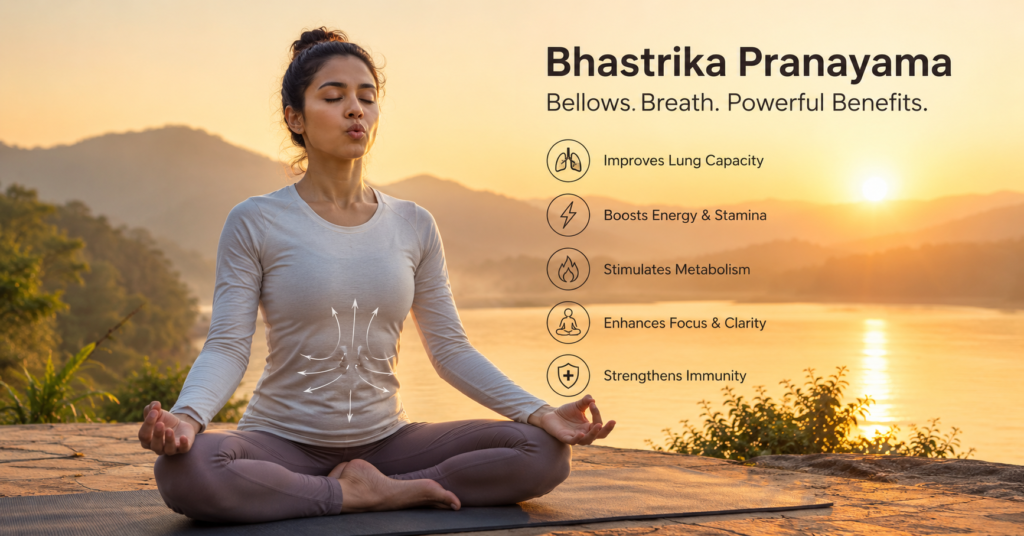
A: Ujjayi uses throat constriction to self-regulate breath pace and create vagal stimulation. Nadi Shodhana (alternate nostril breathing) balances left and right nervous system pathways and is excellent for anxiety but lacks Ujjayi’s extended heat-generating quality. Bhastrika (bellows breath) is vigorous and energizing while Ujjayi is calming. Kapalabhati (skull-shining) is cleansing while Ujjayi is settling. Choose Ujjayi when you want nervous system calm plus sustained focus. Choose Nadi Shodhana when you want nervous system balance and emotional regulation without the depth-seeking component.
Key Takeaways
- Ujjayi Pranayama (“victorious breath” or “ocean breath”) is a yogic breathing technique that creates a soft, ocean-like sound through gentle throat constriction during nasal breathing.
- The Sanskrit name reveals the philosophy: “Ud” (upward) + “Jaya” (conquer) = conquering the fluctuations of mind through breath mastery.
- Ujjayi activates the vagus nerve and parasympathetic nervous system within 2–3 minutes, lowering heart rate, blood pressure, and cortisol measurably.
- Research confirms benefits include: 5–8 bpm heart rate reduction, 15–20% cortisol decrease (4 weeks practice), improved sleep quality in 60% of practitioners, and enhanced focus and emotional regulation.
- The technique is deceptible simple: gently constrict the throat as if whispering with mouth closed, create a soft continuous sound on inhale and exhale, breathe through the nose only, and maintain a 1:1 (equal inhale/exhale) ratio.
- Beginners need 3–7 days to locate the throat sensation and produce the sound. This is normal—avoid forcing it. The sound develops naturally with gentle practice.
- Optimal daily practice: 10 minutes once daily produces measurable benefits within 4 weeks. Start with 3–5 minutes and increase gradually by 2–3 minutes weekly.
- Timing matters: Early morning energizes, pre-sleep extended-exhale variant deepens sleep, mid-day practice improves focus, and 3–5 minute sessions during stress peaks provide immediate relief.
- Common mistakes include: over-constricting the throat, tensing shoulders/jaw, breathing through the mouth, practicing too long initially, and expecting immediate results without consistency.
- Modifications exist for high blood pressure, throat sensitivity, anxiety, asthma, and other conditions—Ujjayi is accessible to nearly everyone when practiced mindfully.
- Contraindications include: uncontrolled high blood pressure, recent neck/throat surgery, severe PTSD with breath trauma—consult your doctor in these cases.
- The psychology of breath mastery is profound: consistent Ujjayi practice literally rewires your nervous system’s default response to stress, creating lasting resilience.
Conclusion
Your nervous system has been running in stress mode far longer than it needs to.
Years of emails, notifications, uncertain deadlines, and the low hum of unresolved tension have wired your fight-or-flight response into your baseline. You don’t feel the stress anymore because you’ve grown numb to it—but your body feels it in the tightness in your chest, the shallow breathing, the constant low-level vigilance.
You don’t need another app, another supplement, another expensive treatment.
You need to teach your nervous system that it’s safe to rest.
Ujjayi Pranayama does this. Not metaphorically. Physically. Measurably.
Within the first three to five minutes of practice, your heart rate drops. Your blood pressure decreases. Cortisol starts its descent. The vagus nerve wakes up and signals your entire body: “It is safe. You can relax now.”
This is not mystical. This is physiology.
The ocean sound you create with Ujjayi becomes your anchor to the present moment—away from the anxious future and the regretful past, into the reality of this single breath, this single exhale, this single moment that is completely safe.
Day by day, week by week, this small practice rewires your nervous system’s default response to stress. After four weeks, you notice you’re not as reactive. After eight weeks, you approach difficult situations with surprising calm. After three months, you realize you’ve become the kind of person who stays steady.
This transformation is available to you right now. Not someday. Not when conditions are perfect. Right now, with the breath that is already inside your body.
The only requirement is a willingness to spend 10 minutes daily learning to breathe like the ocean.
The path to your deepest calm and sharpest focus begins with this simple choice: to practice Ujjayi Pranayama with consistency, gentleness, and faith that your body knows how to heal itself when given the right tools.
Visit TheShivYoga.com and begin your Ujjayi Pranayama practice today. Your first ocean breath is waiting.