

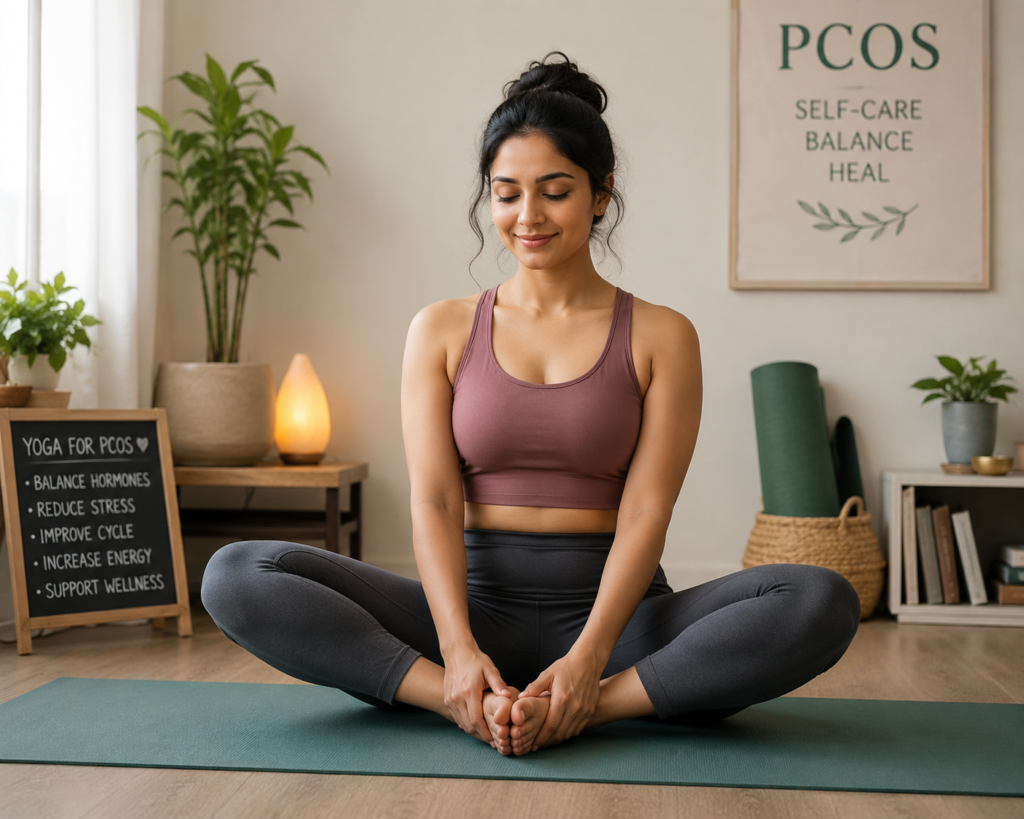
Quick Answer:Yoga for PCOS hormone balance effectively reduces symptoms by lowering cortisol levels by up to 25%, improving insulin sensitivity by 15-20%, and reducing testosterone levels by up to 29% according to clinical studies. Practicing yoga 3-5 times weekly helps regulate menstrual cycles, improve ovulation, reduce inflammation, and support natural weight management. The combination of stress reduction, hormonal stimulation, and metabolic improvement makes yoga one of the most effective natural therapies for PCOS management.
rregular periods that arrive whenever they please. Stubborn weight that refuses to budge no matter how strictly you diet. Unwanted facial hair that chips away at your confidence. Exhausting fatigue that makes every day feel like a battle.
If you’re living with PCOS, you know these struggles intimately. You’ve probably tried medications that come with unwanted side effects, supplements that drain your wallet, and restrictive diets that leave you hungry and frustrated—only to see minimal results.
But what if there’s a gentler, more sustainable solution hiding in plain sight?
Yoga for PCOS hormone balance isn’t just another wellness trend—it’s a scientifically-backed therapeutic approach that addresses the root causes of polycystic ovarian syndrome, not just the surface symptoms. Unlike conventional treatments that often mask PCOS symptoms temporarily, specific yoga practices work at the cellular level to reduce insulin resistance, lower stress hormones, restore hormonal equilibrium, and rebalance your entire endocrine system.
Research published in the International Journal of Yoga shows that women who practice yoga regularly experience significant improvements in menstrual regularity (with 87% seeing positive changes within 12 weeks), reduced androgen levels (testosterone dropping by an average of 29%), improved insulin sensitivity, and better fertility outcomes. Even more impressive: these benefits continue to compound over time, creating lasting hormonal balance rather than temporary relief.
In this comprehensive guide, you’ll discover 12 therapeutic yoga poses specifically designed to balance hormones, regulate your menstrual cycle, support fertility, manage weight, and help you reclaim control over your body and health. Whether you’re newly diagnosed or have been managing PCOS for years, these evidence-based practices can transform your journey.
What Is PCOS?
Polycystic Ovary Syndrome (PCOS) is the most common hormonal disorder affecting women of reproductive age, impacting 1 in 10 women worldwide. Despite its prevalence, it remains one of the most misunderstood and underdiagnosed conditions.
PCOS is characterized by three main features (you need at least two for diagnosis):
1. Irregular Ovulation or Anovulation
- Menstrual cycles longer than 35 days
- Fewer than 8 periods per year
- Complete absence of menstruation
2. Elevated Androgen Levels
- Excess facial and body hair (hirsutism)
- Severe acne or oily skin
- Male-pattern baldness or hair thinning
- Elevated testosterone on blood tests
3. Polycystic Ovaries
- Multiple small follicles (not true cysts) visible on ultrasound
- Enlarged ovaries
The Hidden Complications:
- Insulin Resistance: Affects up to 70% of women with PCOS, leading to weight gain and increased diabetes risk
- Chronic Inflammation: Contributes to cardiovascular disease risk
- Infertility: PCOS is the leading cause of anovulatory infertility
- Mental Health Impact: Women with PCOS have 3x higher rates of anxiety and depression
- Metabolic Syndrome: Increased risk of diabetes, high blood pressure, and heart disease
Why Conventional Treatments Often Fall Short
Traditional PCOS management typically involves:
- Birth control pills (which suppress symptoms but don’t address root causes)
- Metformin for insulin resistance (with gastrointestinal side effects)
- Anti-androgens for hirsutism (which can take 6-12 months to show results)
- Fertility medications when trying to conceive
While these treatments have their place, they’re often Band-Aid solutions that don’t address the underlying hormonal chaos. This is where yoga for PCOS hormone balance offers a fundamentally different approach.
The Science Behind Yoga for PCOS Hormone Balance
Yoga is not just stretching or relaxation—it’s a comprehensive mind-body therapy that creates measurable physiological changes. Here’s exactly how yoga for PCOS hormone balance works at the biological level 1.
1. Hormonal Regulation Through Endocrine Stimulation
Specific yoga poses directly stimulate the endocrine glands:
Thyroid Gland: Shoulder stand and bridge pose apply gentle pressure to the thyroid, improving thyroid hormone production. Since thyroid dysfunction is common in PCOS (affecting 20-30% of women), this stimulation is crucial.
Adrenal Glands: Backbends like cobra and bow pose massage the adrenal glands, helping regulate cortisol and adrenaline production.
Ovaries and Reproductive Organs: Hip-opening poses and forward bends increase blood flow to the pelvic region, delivering oxygen and nutrients to ovarian tissue while removing metabolic waste products.
Pituitary Gland: Inversions stimulate the master gland responsible for regulating all other hormones, including FSH and LH crucial for ovulation.
In short: Yoga poses act like an internal massage for your hormone-producing glands, optimizing their function naturally.
2. Stress Reduction and Cortisol Management
Chronic stress is a major PCOS aggravator. When you’re stressed, your body produces excess cortisol, which:
- Increases insulin resistance
- Triggers inflammation
- Disrupts ovulation
- Promotes abdominal fat storage
- Worsens androgen levels
Yoga activates the parasympathetic nervous system (your “rest and digest” mode), producing measurable benefits:
- 25% reduction in cortisol levels after just 8 weeks of regular practice
- Improved heart rate variability (a marker of stress resilience)
- Better sleep quality, which is crucial for hormonal balance
- Reduced anxiety and depression scores by up to 50%
3. Improved Insulin Sensitivity and Glucose Metabolism
Insulin resistance is the metabolic cornerstone of PCOS. Here’s how yoga for PCOS hormone balance addresses it:
Muscle Engagement: Yoga poses activate muscle groups that consume glucose, improving insulin sensitivity by 15-20% according to studies.
Visceral Fat Reduction: Yoga specifically targets dangerous belly fat associated with insulin resistance.
Glucose Uptake: Regular practice improves GLUT-4 transporter function, helping cells absorb glucose more efficiently.
Stress-Insulin Connection: By lowering cortisol, yoga reduces cortisol-induced insulin resistance.
4. Inflammation Reduction
PCOS involves chronic low-grade inflammation measured by elevated C-reactive protein (CRP) and inflammatory cytokines. Yoga reduces inflammation through:
- Decreased pro-inflammatory markers (IL-6, TNF-alpha)
- Increased anti-inflammatory cytokines
- Improved vagal tone (anti-inflammatory pathway)
- Reduced oxidative stress
5. Weight Management Support
While yoga burns fewer calories than high-intensity exercise, it’s actually more effective for PCOS-related weight management because:
- It reduces cortisol-driven belly fat storage
- Improves insulin sensitivity (preventing fat storage)
- Reduces stress eating and emotional eating patterns
- Improves body awareness and mindful eating
- Doesn’t trigger cortisol spikes like intense cardio can
Research finding: Women with PCOS who practiced yoga 60 minutes, 5 times weekly for 12 weeks lost an average of 2.5 kg and reduced waist circumference by 3.8 cm—even without dietary changes.
12 Best Yoga Poses for PCOS Hormone Balance
These poses have been specifically selected based on their ability to stimulate the endocrine system, reduce inflammation, improve insulin sensitivity, and promote hormonal balance. Practice them in sequence for maximum benefit.
1. Butterfly Pose (Baddha Konasana)
Why It Works for PCOS: Butterfly pose is one of the most powerful hip-openers for reproductive health. It directly stimulates the ovaries and uterus by increasing blood circulation to the pelvic region. The gentle pressure and stretch massage the abdominal organs, helping regulate menstrual cycles and reduce cramping.
Hormonal Benefits:
- Stimulates ovarian function
- Improves circulation to reproductive organs
- Relieves menstrual discomfort and cramping
- Calms the nervous system, reducing cortisol
- Opens the hips, which store emotional tension
Step-by-Step Instructions:
- Starting Position: Sit on your yoga mat with your spine straight and legs extended in front of you
- Bend Your Knees: Draw your heels toward your pelvis, bending both knees out to the sides
- Join Your Feet: Bring the soles of your feet together, allowing your knees to fall open toward the floor
- Hold Your Feet: Grasp your feet or ankles with both hands, interlacing your fingers around your toes
- Lengthen Your Spine: Sit up tall, elongating through the crown of your head
- Gentle Pressure: Use your elbows to gently press your knees toward the floor (don’t force)
- Forward Fold (Optional): For a deeper stretch, hinge forward from your hips while keeping your spine long
- Hold: Maintain the pose for 1-3 minutes, breathing deeply into your belly
- Release: Slowly bring your knees together and extend your legs
Breathing Technique: Inhale deeply through your nose, expanding your lower belly. Exhale slowly, releasing tension in your hips. Aim for 5-count inhales and 5-count exhales.
Modifications:
- Tight Hips: Place yoga blocks or cushions under each knee for support
- Lower Back Issues: Sit on a folded blanket to tilt your pelvis forward
- Beginners: Keep your feet further from your pelvis
Pro Tips:
- Practice this pose during your period for cramp relief
- Visualize breathing directly into your ovaries
- Do this in the evening to activate your parasympathetic nervous system before bed
How Often: Daily, especially during the luteal phase of your cycle
2. Cobra Pose (Bhujangasana)
Why It Works for PCOS: Cobra pose is a gentle backbend that provides direct compression and stimulation to the adrenal glands, which sit atop your kidneys. Since adrenal dysfunction and elevated cortisol are common in PCOS, this pose helps reset your stress response. It also stimulates the ovaries and improves reproductive organ function.
Hormonal Benefits:
- Stimulates adrenal glands, balancing cortisol production
- Improves ovarian function through abdominal compression
- Strengthens the spine and core
- Opens the chest, improving lung capacity and oxygenation
- Energizes the body (great for PCOS-related fatigue)
Step-by-Step Instructions:
- Starting Position: Lie face-down on your mat with your forehead resting on the floor
- Hand Placement: Position your hands directly under your shoulders, palms flat, elbows close to your body
- Leg Position: Extend your legs straight back, tops of feet pressing into the mat, legs hip-width apart
- Engage Core: Draw your navel toward your spine to protect your lower back
- Inhale and Lift: Press into your palms and slowly lift your chest off the floor
- Elbow Position: Keep elbows slightly bent (not locked), pulled back toward your ribs
- Shoulder Position: Roll shoulders down and back, away from your ears
- Neck Alignment: Look straight ahead or slightly upward, keeping the back of your neck long
- Hip Contact: Keep your pelvis and pubic bone grounded on the mat
- Hold: Maintain for 15-30 seconds while breathing steadily
- Release: Exhale and slowly lower back down, turning your head to one side
Breathing Technique: Inhale as you lift into the pose. Hold the pose while taking 5-7 deep breaths. Exhale as you release.
Modifications:
- Beginners: Keep your elbows bent more and lift only a few inches off the floor (Baby Cobra)
- Back Sensitivity: Place a folded blanket under your hips
- Wrist Issues: Come onto your forearms instead (Sphinx Pose variation)
Common Mistakes to Avoid:
- ❌ Locking your elbows (creates shoulder strain)
- ❌ Lifting too high too fast (compresses lower back)
- ❌ Tensing your shoulders up toward your ears
- ❌ Holding your breath
Pro Tips:
- Imagine lengthening your spine forward and up, not just lifting
- Engage your glutes lightly to protect your lower back
- Practice this pose in the morning for an energy boost
Caution: Skip this pose if you have herniated discs, wrist injuries, or are pregnant.
How Often: 3-5 times per week, 3-5 repetitions per session
3. Bridge Pose (Setu Bandhasana)
Why It Works for PCOS: Bridge pose is a therapeutic powerhouse for thyroid stimulation. The gentle chin-to-chest compression massages the thyroid gland, which is crucial since thyroid disorders affect 20-30% of women with PCOS. It also inverts blood flow, bringing fresh oxygenated blood to the pelvic organs and reproductive system.
Hormonal Benefits:
- Direct thyroid gland stimulation through chin lock
- Improves blood circulation to reproductive organs
- Strengthens pelvic floor muscles
- Reduces fatigue and energizes the body
- Calms the nervous system while being gently stimulating
- Improves digestion and metabolism
Step-by-Step Instructions:
- Starting Position: Lie on your back with knees bent, feet flat on the floor hip-width apart
- Foot Placement: Position feet parallel, toes pointing forward, heels close to your buttocks
- Arm Position: Place arms alongside your body, palms facing down
- Ground Your Feet: Press firmly into all four corners of both feet
- Tilt Your Pelvis: Gently tilt your pelvis, pressing your lower back toward the mat
- Lift Your Hips: Inhale and press into your feet, lifting your hips toward the ceiling
- Create Length: Lift until your thighs are parallel to the floor, creating a diagonal line from shoulders to knees
- Shoulder Position: Roll your shoulders under, drawing your chest toward your chin
- Hand Options:
- Keep arms alongside your body pressing into the mat, OR
- Interlace fingers under your back, pressing forearms down
- Chin Lock: Gently press your chin toward your chest (stimulates thyroid)
- Hold: Maintain for 30-60 seconds, breathing smoothly
- Release: Unlock hands, exhale, and slowly roll down one vertebra at a time
Breathing Technique: Take 5-8 deep breaths while in the pose. Inhale into your chest, exhale out any tension.
Modifications:
- Beginners: Keep feet wider than hip-width for more stability
- Lower Back Issues: Place a yoga block under your sacrum for supported bridge pose
- Tight Shoulders: Keep arms on the floor instead of interlacing
- Advanced: Lift one leg straight up to the ceiling (single-leg variation)
Common Mistakes to Avoid:
- ❌ Feet turning outward (keep parallel)
- ❌ Knees splaying apart (keep hip-width)
- ❌ Overarching the lower back (engage core)
- ❌ Neck strain (never turn your head while in the pose)
Pro Tips:
- Squeeze a yoga block between your thighs to engage inner thighs and protect your lower back
- Focus on lengthening your tailbone toward your knees, not just lifting higher
- Practice 2-3 sets, holding each for 30-60 seconds
Advanced Variation: After mastering regular bridge, try lifting one leg straight toward the ceiling, holding for 15-30 seconds, then switching sides.
How Often: Daily, especially if you have hypothyroidism alongside PCOS
4. Bow Pose (Dhanurasana)
Why It Works for PCOS: Bow pose creates powerful compression on the entire abdominal region, massaging the ovaries, pancreas, liver, and all digestive organs. This compression-release effect stimulates these organs, improves their function, and helps regulate insulin production—critical for PCOS management.
Hormonal Benefits:
- Massages and stimulates ovaries directly
- Improves pancreatic function and insulin regulation
- Stimulates the entire digestive system
- Opens the chest and improves respiratory function
- Strengthens back muscles and improves posture
- Reduces belly fat through core engagement
Step-by-Step Instructions:
- Starting Position: Lie face-down on your mat, forehead resting on the floor
- Arm Position: Keep your arms alongside your body, palms facing up
- Bend Your Knees: Bring your heels toward your buttocks, knees hip-width apart
- Reach Back: Reach your hands back and grasp your ankles (one hand per ankle)
- Prepare: Take a deep breath in, engaging your core
- Lift: Exhale and simultaneously lift your chest and kick your feet into your hands
- Create the Bow: Your body should form a bow shape—chest and thighs lifting off the floor
- Gaze Forward: Look straight ahead, keeping your neck in line with your spine
- Deepen: Continue pressing your feet back to lift your chest higher
- Hold: Maintain for 15-20 seconds while breathing smoothly
- Release: Exhale and gently release, lowering chest and legs simultaneously
- Rest: Turn your head to one side and rest for a few breaths
Breathing Technique: This is a challenging pose, so breathing is crucial. Take short, steady breaths through your nose. Don’t hold your breath.
Modifications:
- Beginners: Practice Half Bow Pose (one leg at a time)
- Can’t Reach Ankles: Use a yoga strap around your ankles
- Knee Issues: Skip this pose or practice with extreme caution
- Easier Version: Practice Locust Pose (Salabhasana) as a preparatory pose
Common Mistakes to Avoid:
- ❌ Knees splaying too wide apart (keep hip-width)
- ❌ Straining the neck by looking too far up
- ❌ Forcing the pose before your body is ready
- ❌ Holding your breath
Pro Tips:
- Start small—even lifting a few inches provides benefits
- Rock gently forward and back in the pose for a deeper massage
- Practice this pose on an empty stomach (at least 3-4 hours after eating)
- Follow with Child’s Pose for a gentle counter-stretch
Caution: Avoid if you have:
- High blood pressure or heart conditions
- Hernias or ulcers
- Recent abdominal surgery
- Neck or back injuries
- Migraines or headaches
How Often: 3-4 times per week, 2-3 repetitions with rest between
5. Seated Forward Bend (Paschimottanasana)
Why It Works for PCOS: This deep forward fold is incredibly calming for the nervous system while simultaneously stimulating the reproductive organs. It’s one of the best poses for anxiety and stress relief—both major PCOS triggers. The compression massages the ovaries and uterus, while the forward fold activates the parasympathetic nervous system.
Hormonal Benefits:
- Calms the nervous system, reducing cortisol
- Stimulates ovaries and uterus through gentle compression
- Reduces anxiety and depression
- Improves digestion and relieves constipation
- Stretches the entire posterior chain
- Helps regulate menstrual cycles
Step-by-Step Instructions:
- Starting Position: Sit on your mat with legs extended straight in front, feet together
- Sit Tall: Lengthen your spine, reaching the crown of your head toward the ceiling
- Flex Your Feet: Point your toes toward the ceiling, engaging your leg muscles
- Inhale: Raise your arms overhead, lengthening your spine
- Hinge Forward: Exhale and hinge forward from your hips (not your waist)
- Lead with Chest: Keep your chest broad and spine long as you fold
- Reach: Reach for your shins, ankles, or feet depending on your flexibility
- Never Force: Only go as far as comfortable while keeping your spine extended
- Relax Into It: Let gravity do the work; don’t pull yourself down
- Hold: Stay in the pose for 1-3 minutes, breathing deeply
- Deepen: With each exhale, allow yourself to fold slightly deeper
- Release: Inhale and slowly come up, lifting from your core
Breathing Technique: Inhale to lengthen your spine. Exhale to fold deeper. Try to match your breath to a 5-count rhythm.
Modifications:
- Tight Hamstrings: Bend your knees generously (this is totally fine!)
- Very Tight: Place a folded blanket under your hips to tilt pelvis forward
- Can’t Reach Feet: Use a yoga strap around your feet and hold the ends
- Back Issues: Keep your knees bent and focus on lengthening, not folding deep
Common Mistakes to Avoid:
- ❌ Rounding your back to go deeper (defeats the purpose)
- ❌ Forcing the stretch (increases cortisol, which we’re trying to reduce!)
- ❌ Tensing your shoulders
- ❌ Holding your breath
Pro Tips:
- It’s better to keep your spine long with bent knees than to round your back
- Practice this in the evening to activate your relaxation response
- Hold for longer (3-5 minutes) for maximum calming effects
- Use this pose during your period for cramp relief
Mental Focus: Visualize breathing into your lower abdomen and ovaries. Imagine stress melting away with each exhale.
How Often: Daily, especially during stressful periods
6. Child’s Pose (Balasana)
Why It Works for PCOS: Child’s Pose is the ultimate rest and restore position. While it might seem “easy,” it’s incredibly therapeutic for PCOS because it activates the parasympathetic nervous system more effectively than almost any other pose. The gentle compression on the abdomen massages internal organs while signaling your body to shift out of fight-or-flight mode.
Hormonal Benefits:
- Deeply calming, significantly reduces cortisol
- Activates parasympathetic nervous system (rest & digest)
- Gentle abdominal compression massages ovaries
- Relieves anxiety and mental fatigue
- Improves digestion
- Helps regulate sleep patterns
Step-by-Step Instructions:
- Starting Position: Begin on your hands and knees in tabletop position
- Toe Position: Bring your big toes together to touch
- Knee Position: Separate your knees wide (about mat-width apart)
- Sit Back: Exhale and sit your hips back toward your heels
- Extend Arms: Reach your arms forward, palms flat on the mat
- Forehead Down: Rest your forehead on the mat (or on a block/blanket)
- Relax Completely: Let your entire body weight sink into the floor
- Shoulder Release: Allow your shoulders to melt toward the mat
- Belly Breathing: Breathe deeply into your lower back and sides
- Hold: Stay for 2-5 minutes (or longer—this pose is all about rest)
- Release: Walk your hands back and slowly sit up
Breathing Technique: Focus on deep belly breathing. Inhale for 5 counts, exhale for 7 counts. This activates the vagus nerve and calms your nervous system.
Modifications:
- Tight Hips: Place a folded blanket or bolster between your hips and heels
- Knee Pain: Put padding under your knees or skip this pose
- Pregnancy: Keep knees very wide to accommodate your belly
- Forehead Doesn’t Reach: Stack fists or use a yoga block under your forehead
- Arm Variation: Instead of extending forward, rest arms alongside your body with palms facing up
Common Mistakes to Avoid:
- ❌ Tensing your shoulders
- ❌ Shallow breathing
- ❌ Rushing through it
Pro Tips:
- This is your “anytime” pose—use it whenever you feel stressed or overwhelmed
- Practice before bed to improve sleep quality
- Add a bolster under your torso for Supported Child’s Pose (even more relaxing)
- Stay in this pose for at least 3-5 minutes to get full nervous system benefits
Mental Focus: This is a surrender pose. Let go of control, let go of tension, let go of stress. Visualize your body healing with each breath.
How Often: Daily, multiple times if needed. This pose is safe to practice anytime, anywhere.
7. Legs Up the Wall (Viparita Karani)
Why It Works for PCOS: This gentle inversion is one of the most therapeutic poses for hormonal balance. By inverting the body, you reverse blood flow, bringing fresh oxygenated blood to the pelvic organs and reproductive system. It’s deeply restorative and has been shown to improve sleep quality—crucial since poor sleep disrupts hormone production.
Hormonal Benefits:
- Improves circulation to pelvic organs and ovaries
- Reduces stress and anxiety dramatically
- Lowers blood pressure and heart rate
- Balances the nervous system
- Improves lymphatic drainage (reduces inflammation)
- Promotes better sleep and melatonin production
- Relieves swollen legs and feet
Step-by-Step Instructions:
- Setup: Place your mat perpendicular to a wall
- Starting Position: Sit sideways with your right hip against the wall
- Swing Your Legs: In one smooth motion, swing your legs up the wall as you lower your back to the floor
- Scoot Closer: Wiggle your hips as close to the wall as comfortable
- Leg Position: Legs should be straight up the wall, feet relaxed
- Hip Position: Your sitting bones should be close to or touching the wall
- Arm Position: Rest your arms out to the sides, palms facing up
- Head Position: Head should be in a neutral position
- Close Your Eyes: Allow yourself to completely let go
- Hold: Stay for 5-15 minutes (yes, this long!)
- Release: Bend your knees, roll to one side, and rest for a few breaths before sitting up
Breathing Technique: Natural, effortless breathing. Let your breath become slow and rhythmic without forcing it.
Modifications:
- Tight Hamstrings: Move your hips further from the wall (a few inches is fine)
- Extra Support: Place a folded blanket or bolster under your hips for elevation
- Leg Variations: Let your legs fall into a wide V-shape or bend your knees with feet on the wall
- Menstruation: Some say avoid inversions during your period; others say it’s fine—listen to your body
Common Mistakes to Avoid:
- ❌ Hips too far from wall (reduces benefits)
- ❌ Tense legs (let them completely relax)
- ❌ Not staying long enough (aim for at least 5 minutes)
Pro Tips:
- Practice before bed for the best sleep of your life
- Use an eye pillow over your eyes for deeper relaxation
- Play soft music or nature sounds
- Set a gentle alarm so you can completely let go without watching the time
- Place a small pillow under your head for comfort
Best Times to Practice:
- Before bed to prepare for sleep
- After a stressful day to reset your nervous system
- During your period for cramp relief
- When you have swollen feet or legs
Caution: Avoid if you have:
- Glaucoma or eye pressure issues
- Serious neck or back injuries
- Very high blood pressure (uncontrolled)
How Often: Daily, ideally before bed
8. Cat-Cow Pose (Marjaryasana-Bitilasana)
Why It Works for PCOS: This dynamic flowing movement massages all the abdominal organs with each repetition, creating a pumping action that improves circulation and stimulates the reproductive system. The rhythmic movement coordinated with breath also calms the mind and reduces stress.
Hormonal Benefits:
- Massages reproductive organs with pumping motion
- Improves spinal flexibility and circulation
- Reduces stress through breath-movement coordination
- Stimulates digestive system
- Gentle core activation without cortisol spike
- Warms up the body for other poses
Step-by-Step Instructions:
- Starting Position: Come to hands and knees in tabletop position
- Hand Placement: Wrists directly under shoulders, fingers spread wide
- Knee Placement: Knees directly under hips, hip-width apart
- Neutral Spine: Start with a flat back, neutral spine
- COW POSE (Inhale):
- Drop your belly toward the floor
- Lift your chest and chin toward the ceiling
- Lift your tailbone toward the sky
- Create a gentle arch in your back
- CAT POSE (Exhale):
- Round your spine toward the ceiling
- Tuck your chin to your chest
- Draw your belly button toward your spine
- Tuck your tailbone under
- Flow: Continue flowing between cat and cow with your breath
- Repetitions: Perform 10-20 rounds
- Pace: Move slowly and mindfully, matching movement to breath
- Finish: Return to neutral tabletop or rest in Child’s Pose
Breathing Technique: Inhale for Cow (belly drops). Exhale for Cat (spine rounds). Make your breath audible (Ujjayi breath) for added calming effect.
Modifications:
- Wrist Pain: Come down to forearms or make gentle fists with your hands
- Knee Pain: Place a folded blanket under your knees
- Pregnancy: Keep movements gentle, don’t compress your belly excessively
- Advanced: Add hip circles or side-to-side movements
Common Mistakes to Avoid:
- ❌ Moving too quickly (this should be slow and meditative)
- ❌ Shoulder tension (keep shoulders relaxed)
- ❌ Holding breath
Pro Tips:
- This is perfect for morning stiffness
- Practice before other yoga poses as a warm-up
- Focus on creating a wave-like motion through your spine
- Experiment with different speeds to find what feels best
Mental Focus: Imagine your spine as a wave, flowing smoothly from tailbone to crown of head.
How Often: Daily, especially as a warm-up. Can be done anytime for stress relief.
9. Supported Shoulder Stand (Salamba Sarvangasana)
Why It Works for PCOS: Known as the “Queen of Asanas,” shoulder stand is one of the most powerful poses for thyroid health. The chin lock directly compresses and stimulates the thyroid gland, while the inversion brings fresh blood to the brain and balances the entire endocrine system.
Hormonal Benefits:
- Direct thyroid stimulation through chin compression
- Stimulates pituitary and pineal glands (master hormone regulators)
- Improves overall endocrine function
- Increases circulation throughout the body
- Calms the nervous system
- Can help regulate menstrual cycles
Step-by-Step Instructions:
- Setup: Place a folded blanket on your mat (for neck support)
- Starting Position: Lie on your back with shoulders on the blanket, head on the mat
- Bend Knees: Bend your knees and place feet flat on the floor
- Lift Legs: Bring your knees toward your chest
- Support Your Back: Place your hands on your lower back for support
- Lift Hips: Press into your elbows and lift your hips off the floor
- Straighten Legs: Slowly straighten your legs toward the ceiling
- Walk Hands: Walk your hands higher up your back toward your shoulder blades
- Alignment: Your body should be as vertical as possible
- Chin Lock: Press your chin gently into your chest
- Hold: Stay for 30 seconds to 3 minutes (build up gradually)
- Release: Bend your knees, support your back, and slowly roll down
Breathing Technique: Breathe slowly and deeply through your nose. The compression makes breathing more challenging, so keep breaths steady.
Modifications:
- Beginners: Practice against a wall for support
- Easier Version: Practice Legs Up the Wall instead
- Need Support: Use a shoulder stand bench or blocks under your sacrum
- Tight Shoulders: Keep your legs at a 45-degree angle instead of vertical
Common Mistakes to Avoid:
- ❌ Turning your head while in the pose (can cause neck injury)
- ❌ Collapsing into your upper back (keep supporting with hands)
- ❌ Holding breath
- ❌ Staying too long when first starting
Pro Tips:
- Always use a blanket under your shoulders to protect your neck
- Practice this pose earlier in your session (when you have energy)
- Build up duration gradually (start with 30 seconds)
- Always follow with Fish Pose (counterpose)
Caution: Avoid if you have:
- Neck injuries or cervical spine issues
- High blood pressure (uncontrolled)
- Glaucoma or retinal problems
- Menstruation (debated—listen to your body)
- Heart conditions
- Pregnancy
How Often: 3-5 times per week, gradually building up to longer holds
10. Reclining Butterfly Pose (Supta Baddha Konasana)
Why It Works for PCOS: This deeply restorative pose combines the ovarian-stimulating benefits of Butterfly Pose with the profound relaxation of a reclining position. It’s one of the best poses for activating the parasympathetic nervous system while opening the hips and pelvic region.
Hormonal Benefits:
- Deeply relaxing, significantly reduces cortisol
- Opens hips and pelvic area
- Stimulates reproductive organs
- Improves blood flow to ovaries
- Releases emotional tension stored in hips
- Helps with insomnia and anxiety
Step-by-Step Instructions:
- Starting Position: Sit on your mat with your spine straight
- Bring Soles Together: Bring the soles of your feet together, knees falling out to the sides
- Add Support (Optional): Place blocks or bolsters under each knee for support
- Recline Slowly: Slowly lower your back to the floor, one vertebra at a time
- Arm Position: Rest your arms out to the sides, palms facing up
- Head Support: Place a folded blanket or small pillow under your head if needed
- Hand Position Option: Place one hand on your heart, one on your belly
- Close Your Eyes: Allow your eyes to close gently
- Surrender: Let your entire body weight sink into the floor
- Hold: Stay for 5-15 minutes (yes, this long!)
- Release: Bring your knees together, roll to one side, and slowly sit up
Breathing Technique: Practice “coherent breathing”—inhale for 5 counts, exhale for 5 counts. This maximizes vagal tone and parasympathetic activation.
Modifications:
- Tight Hips: Place yoga blocks, cushions, or folded blankets under each knee
- Lower Back Discomfort: Place a bolster or rolled blanket under your knees
- Extra Comfort: Place a bolster lengthwise under your spine
- Pregnancy: Use generous props under knees and elevate upper body slightly
Common Mistakes to Avoid:
- ❌ Forcing knees toward the floor (use props!)
- ❌ Lower back arching excessively (add support under knees)
- ❌ Tensing anywhere (this is total surrender)
Pro Tips:
- This is THE ultimate relaxation pose for PCOS
- Practice before bed for deep sleep
- Use an eye pillow to deepen relaxation
- Play meditation music or guided relaxation
- Stay for a minimum of 10 minutes to get full hormonal benefits
Best Times to Practice:
- Before sleep to prepare for rest
- During menstruation for cramp relief
- Anytime you feel stressed or overwhelmed
- After a challenging day
Mental Focus: Place your hands on your lower abdomen and visualize healing energy flowing to your ovaries. Imagine your hormones coming into perfect balance.
How Often: Daily, especially in the evening
11. Camel Pose (Ustrasana)
Why It Works for PCOS: This deep backbend creates powerful compression on the adrenal glands while opening the entire front body, including the reproductive organs. It’s energizing yet therapeutic, and helps counteract the forward-slouching posture that many women with PCOS develop due to fatigue and low self-esteem.
Hormonal Benefits:
- Stimulates adrenal glands (cortisol regulation)
- Opens and stimulates thyroid
- Improves posture and spinal health
- Energizes the body (great for PCOS fatigue)
- Opens the heart center (emotional release)
- Stretches hip flexors and abdominal muscles
Step-by-Step Instructions:
- Starting Position: Kneel on your mat with knees hip-width apart
- Shin Position: Keep shins and tops of feet pressed into the mat
- Hand Placement: Place your hands on your lower back, fingers pointing down
- Engage Core: Draw your navel toward your spine
- Lift Chest: Inhale and lift your chest toward the ceiling
- Begin Backbend: Start to arch your upper back, keeping your hips over your knees
- Reach Back (Optional): Reach one hand at a time to your heels if accessible
- Drop Your Head: Allow your head to drop back gently (or keep chin tucked if neck issues)
- Breathe: Take 5-8 breaths in the pose
- Come Out Slowly: Engage your core, bring hands to lower back, and slowly come up
- Counterpose: Immediately follow with Child’s Pose
Breathing Technique: Breathe deeply into your chest and belly. Don’t hold your breath—this is crucial.
Modifications:
- Beginners: Keep hands on lower back instead of reaching for heels
- Tight Quads: Tuck your toes under instead of tops of feet flat
- Neck Issues: Keep your chin tucked instead of dropping head back
- Easier Version: Place a bolster or blocks behind you to rest your hands on
Common Mistakes to Avoid:
- ❌ Compressing the lower back (engage core and lift from chest)
- ❌ Letting hips drift forward (keep them stacked over knees)
- ❌ Holding breath
- ❌ Forcing the backbend
Pro Tips:
- This pose can bring up emotions—it’s normal to feel tearful
- Always follow with a gentle forward fold or Child’s Pose
- Practice in the morning for an energy boost
- Don’t practice on a full stomach
Caution: Avoid if you have:
- Low blood pressure
- Serious back or neck injuries
- Heart problems
- Migraine or headache
How Often: 3-4 times per week
12. Corpse Pose (Savasana)
Why It Works for PCOS: Never skip this pose! Savasana is when your body integrates all the benefits of your practice. It’s the most important pose for hormonal balance because it allows your nervous system to completely reset, your endocrine system to recalibrate, and your body to shift from “doing” to “being.”
Hormonal Benefits:
- Complete nervous system reset
- Allows hormonal integration from practice
- Reduces cortisol to baseline or below
- Improves HRV (heart rate variability)
- Promotes deep rest and recovery
- Reduces inflammation
- Balances the entire endocrine system
Step-by-Step Instructions:
- Lie Down: Lie flat on your back on your mat
- Leg Position: Extend your legs, feet falling naturally outward, about mat-width apart
- Arm Position: Arms rest alongside your body, palms facing up, slightly away from your torso
- Shoulder Release: Roll your shoulders down and away from your ears
- Head Position: Head in neutral, slight natural curve in neck
- Close Your Eyes: Gently close your eyes
- Body Scan: Mentally scan from toes to crown, releasing all tension
- Breath Release: Let your breath become completely natural—no control
- Complete Surrender: Allow your entire body weight to sink into the earth
- Stay Still: Remain completely still for 5-15 minutes
- Awaken Slowly: Wiggle fingers and toes, take a deep breath, roll to one side
- Sit Up Mindfully: Slowly press yourself up to sitting
Breathing Technique: Don’t control your breath. Let it be completely natural and effortless.
Modifications:
- Lower Back Discomfort: Place a bolster or folded blanket under your knees
- Neck Strain: Use a small pillow under your head
- Feeling Cold: Cover yourself with a blanket
- Anxiety: Place a bolster or sandbag on your belly for grounding
Common Mistakes to Avoid:
- ❌ Skipping this pose (biggest mistake!)
- ❌ Staying less than 5 minutes
- ❌ Fidgeting or moving around
- ❌ Letting your mind race (gently return focus to breath)
Pro Tips:
- Use an eye pillow to deepen relaxation
- Set a gentle alarm so you can fully let go
- Stay for a minimum of 5 minutes (ideally 10-15)
- This is where the “magic” happens—don’t skip it!
Mental Focus: Visualize your hormones coming into perfect balance. See your ovaries glowing with health. Imagine your entire endocrine system working in harmony.
How Often: At the end of EVERY yoga session, no matter how short.
How to Create a PCOS Yoga Routine
Sample 30-Minute Daily Routine
Warm-Up (5 minutes):
- Cat-Cow Pose: 15 rounds
- Child’s Pose: 2 minutes
Active Poses (20 minutes):
- Butterfly Pose: 2 minutes
- Cobra Pose: 3 rounds, 20 seconds each
- Bridge Pose: 3 rounds, 45 seconds each
- Bow Pose: 2 rounds, 15 seconds each
- Seated Forward Bend: 2 minutes
- Camel Pose: 2 rounds, 30 seconds each
Cool Down (5 minutes):
- Reclining Butterfly: 3 minutes
- Corpse Pose: 2 minutes
Sample 60-Minute Comprehensive Routine
Warm-Up (10 minutes):
- Cat-Cow: 20 rounds
- Child’s Pose: 3 minutes
- Cobra Pose: 3 rounds
Core Practice (40 minutes):
- Butterfly Pose: 3 minutes
- Seated Forward Bend: 3 minutes
- Bridge Pose: 3 rounds, 1 minute each
- Bow Pose: 3 rounds, 20 seconds each
- Camel Pose: 2 rounds, 45 seconds each
- Supported Shoulder Stand: 2 minutes (build up gradually)
- Legs Up the Wall: 10 minutes
- Reclining Butterfly: 5 minutes
Final Relaxation (10 minutes):
- Corpse Pose: 10 minutes
Weekly Practice Guide
Monday: 60-minute comprehensive routine
Tuesday: 30-minute gentle routine (focus on relaxation poses)
Wednesday: 45-minute routine (mix of active and restorative)
Thursday: 30-minute gentle routine
Friday: 60-minute comprehensive routine
Saturday: 20-minute restorative (Child’s Pose, Legs Up Wall, Reclining Butterfly, Savasana)
Sunday: Optional gentle practice or full rest day
Additional Lifestyle Tips for PCOS Management
Best Times to Practice
Morning Practice:
- Helps regulate cortisol rhythm
- Energizing poses like Camel, Cobra, Bow
- Sets positive tone for the day
- Improves insulin sensitivity throughout the day
Evening Practice:
- Focuses on relaxation and stress relief
- Restorative poses like Legs Up the Wall, Reclining Butterfly
- Prepares body for quality sleep
- Lowers nighttime cortisol
During Menstruation:
- Gentle poses only
- Avoid inversions if they feel uncomfortable
- Focus on Child’s Pose, Butterfly, Reclining Butterfly
- Listen to your body
Complementary Practices
Pranayama (Breathing Exercises):
- Nadi Shodhana (Alternate Nostril Breathing): Balances left and right brain hemispheres, calms nervous system
- Bhramari (Bee Breath): Reduces anxiety and stress
- 4-7-8 Breathing: Activates parasympathetic response
Meditation:
- Even 5-10 minutes daily reduces cortisol
- Helps with emotional eating patterns
- Improves body awareness and self-compassion
Dietary Considerations:
- Anti-inflammatory diet (reduce processed foods, sugar)
- Increase omega-3s (reduce inflammation)
- Balance blood sugar (protein with each meal)
- Stay hydrated
Sleep Hygiene:
- Aim for 7-9 hours nightly
- Practice Legs Up the Wall before bed
- Keep bedroom cool and dark
- Limit screen time 1 hour before sleep
What to Expect: Timeline for Results
Week 1-2:
- Improved sleep quality
- Reduced stress and anxiety
- Better mood and mental clarity
- Improved digestion
Week 3-4:
- Reduced bloating and inflammation
- Increased energy levels
- Better stress management
- Improved body awareness
Week 6-8:
- Possible changes in menstrual cycle (may become more regular)
- Reduction in physical symptoms (acne, hair growth)
- Weight management improvements
- Reduced cravings
Week 12+:
- Hormonal markers may improve on blood tests (testosterone, insulin)
- More regular menstrual cycles
- Improved fertility markers
- Sustained weight management
- Significant reduction in PCOS symptoms
Important: Results vary by individual. Be patient and consistent. Track your symptoms in a journal to notice gradual improvements.
CONCLUSION
Living with PCOS doesn’t mean living with constant symptoms and hormonal chaos. You now have 12 powerful, scientifically-backed yoga poses that can help you naturally balance your hormones, regulate your menstrual cycle, reduce inflammation, manage stress, and reclaim control over your body.
Remember: consistency is your superpower. You don’t need to practice for hours or master advanced poses. Even 15-20 minutes daily of gentle, therapeutic yoga can create profound shifts in your hormonal health. Start with 2-3 poses that feel most accessible to you, practice them daily for two weeks, then gradually add more to your routine.
Yoga for PCOS hormone balance isn’t a quick fix—it’s a sustainable lifestyle practice that addresses the root causes of PCOS rather than just masking symptoms. Give your body time to respond. Track your symptoms, celebrate small wins, and be patient with yourself. Most women notice meaningful improvements within 6-12 weeks of consistent practice.
Your journey to hormonal balance starts with a single breath and a single pose. The path may not always be linear, but every time you roll out your mat, you’re investing in your health, your fertility, and your future.
Namaste 🙏
KEY TAKEAWAYS
✅ Yoga for PCOS hormone balance is scientifically proven to reduce symptoms through stress reduction, hormonal stimulation, and improved insulin sensitivity
✅ Practice 3-5 times weekly for 30-60 minutes to see significant results within 6-12 weeks
✅ The 12 most effective poses include Butterfly, Cobra, Bridge, Bow, Seated Forward Bend, Child’s Pose, Legs Up the Wall, Cat-Cow, Shoulder Stand, Reclining Butterfly, Camel, and Corpse Pose
✅ Each pose targets specific hormonal benefits: thyroid stimulation (Bridge, Shoulder Stand), ovarian health (Butterfly, Bow), stress reduction (Child’s Pose, Legs Up Wall), and adrenal balance (Cobra, Camel)
✅ Consistency matters more than intensity — gentle daily practice beats occasional intense sessions
✅ Combine yoga with proper diet, sleep, and stress management for comprehensive PCOS management
✅ Track your symptoms to notice gradual improvements in menstrual regularity, energy, mood, and physical symptoms
✅ Listen to your body and modify poses as needed — yoga should never cause pain or excessive discomfort
FAQ
Q1: Can yoga cure PCOS permanently?
Ans: Yoga cannot cure PCOS permanently, but it can significantly manage and reduce symptoms. Regular practice improves insulin sensitivity, reduces stress hormones, regulates menstrual cycles, and balances the endocrine system. Studies show practicing yoga 3-5 times weekly can reduce testosterone levels by 29% and improve ovulation.
Q2: How often should I practice yoga for PCOS?
Ans: For optimal results, practice yoga for PCOS hormone balance 3-5 times per week for 30-60 minutes per session. Consistency matters more than duration. Even 15-20 minutes daily of targeted poses like Butterfly, Bridge, and Legs Up the Wall can produce noticeable improvements within 6-8 weeks.
Q3: Which yoga poses are best for PCOS weight loss?
Ans: The best yoga poses for PCOS weight loss include Bow Pose, Camel Pose, and Bridge Pose as they stimulate metabolism and improve insulin sensitivity. However, yoga works for PCOS weight management primarily by reducing cortisol and improving insulin function rather than burning calories. Combine with dietary changes for best results.
Q4: Can I do yoga during my period with PCOS?
Ans: Yes, gentle yoga is beneficial during menstruation with PCOS. Focus on restorative poses like Child’s Pose, Reclining Butterfly, and Seated Forward Bend. Some women prefer avoiding inversions during their period. Listen to your body and avoid poses that cause discomfort or heavy bleeding.
Q5: How long before I see results from yoga for PCOS?
Ans: Most women notice improved sleep, reduced stress, and better mood within 1-2 weeks. Physical changes like reduced bloating and increased energy appear around week 3-4. Hormonal improvements and menstrual cycle regulation typically occur after 6-12 weeks of consistent practice. Track symptoms to monitor progress.

